Indonesia palm oil is one of the most active industries in Southeast Asia, and palm oil mill construction continues to create demand for reliable industrial valves. During a recent customer visit from Indonesia, we discussed local palm oil mill projects, plantation owner requirements, common plant capacities such as 45 tons per hour and larger, and current valve usage in palm oil processing plants.
The customer mainly builds palm oil mills for plantation owners. In these mills, many valves are still manually operated, especially for isolation, maintenance and general utility service. Automated valves are not yet used everywhere in this industry, but they are expected to become more common as new mills become larger, more efficient and more process controlled.
One valve type that stood out in the discussion was the pneumatic V-notch ball valve. In palm oil mills, some process streams contain oil, water, fiber, fruit residue, sludge and suspended particles. These are not clean liquid services. For such media, a V-notch ball valve can be more suitable than a standard ball valve or ordinary control valve because it provides rotary control, high flow capacity and a useful shearing action at the V-shaped edge.
Indonesia Palm Oil Mills and Valve Demand
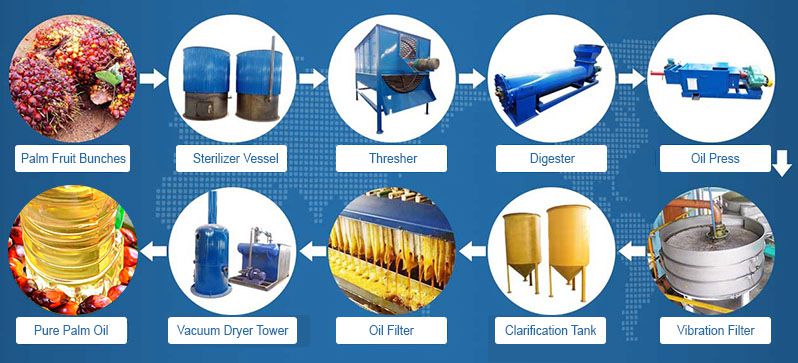
Palm oil mills process fresh fruit bunches into crude palm oil and palm kernel products. A commercial palm oil mill may process 45 tons of FFB per hour, and larger mills may be designed for 60 tons per hour or more depending on plantation supply and investment scale.
The general process includes fruit reception, sterilization, threshing, digestion, pressing, clarification, oil drying, kernel recovery and palm oil mill effluent treatment. These areas require different types of valves for steam, hot water, condensate, crude palm oil, sludge, wastewater, chemicals and compressed air.
In many mills, manual valves are used for basic open-close service. Examples include gate valves, ball valves, butterfly valves, check valves and drain valves. These valves are important and will remain widely used. However, as automation increases, more pneumatic valves and control valves may be added to key process points where repeatability and remote operation matter.
For Indonesia palm oil projects, this creates a practical opportunity: not every valve needs automation, but certain difficult media and frequent-operation points may benefit from pneumatic control valves.
Where V-Notch Ball Valves Fit in Palm Oil Processing
A V-notch ball valve is not used for whole fresh fruit bunches. Whole FFB is normally moved by loading ramps, conveyors, cages, hoppers, sterilizer systems and mechanical handling equipment. The value of a V-notch ball valve appears when the process stream becomes flowable and contains fiber, fruit residue, oil slurry or suspended solids.
In palm oil mills, V-notch ball valves may be considered for:
- Digested fruit mash transfer where the medium is hot and fibrous.
- Press-related oil, water and solid mixture lines.
- Crude palm oil slurry before screening or clarification.
- Sludge oil handling and recirculation.
- POME or wastewater streams with suspended solids.
- Fiber-containing process liquid lines.
- Controlled discharge points where ordinary on-off valves are not enough.
The exact valve location depends on the mill design. Some plants may use screw conveyors, mechanical gates, chutes or pumps instead of valves in certain areas. The key point is simple: when the medium is pumpable or flowable but contains particles or fibers, a V-notch ball valve becomes worth considering.
What Is a V-Notch Ball Valve?
A V-notch ball valve, also called a V-port ball valve or segmented ball valve, is a rotary control valve with a V-shaped opening in the ball or segment. As the ball rotates, the V opening gradually changes the flow area.
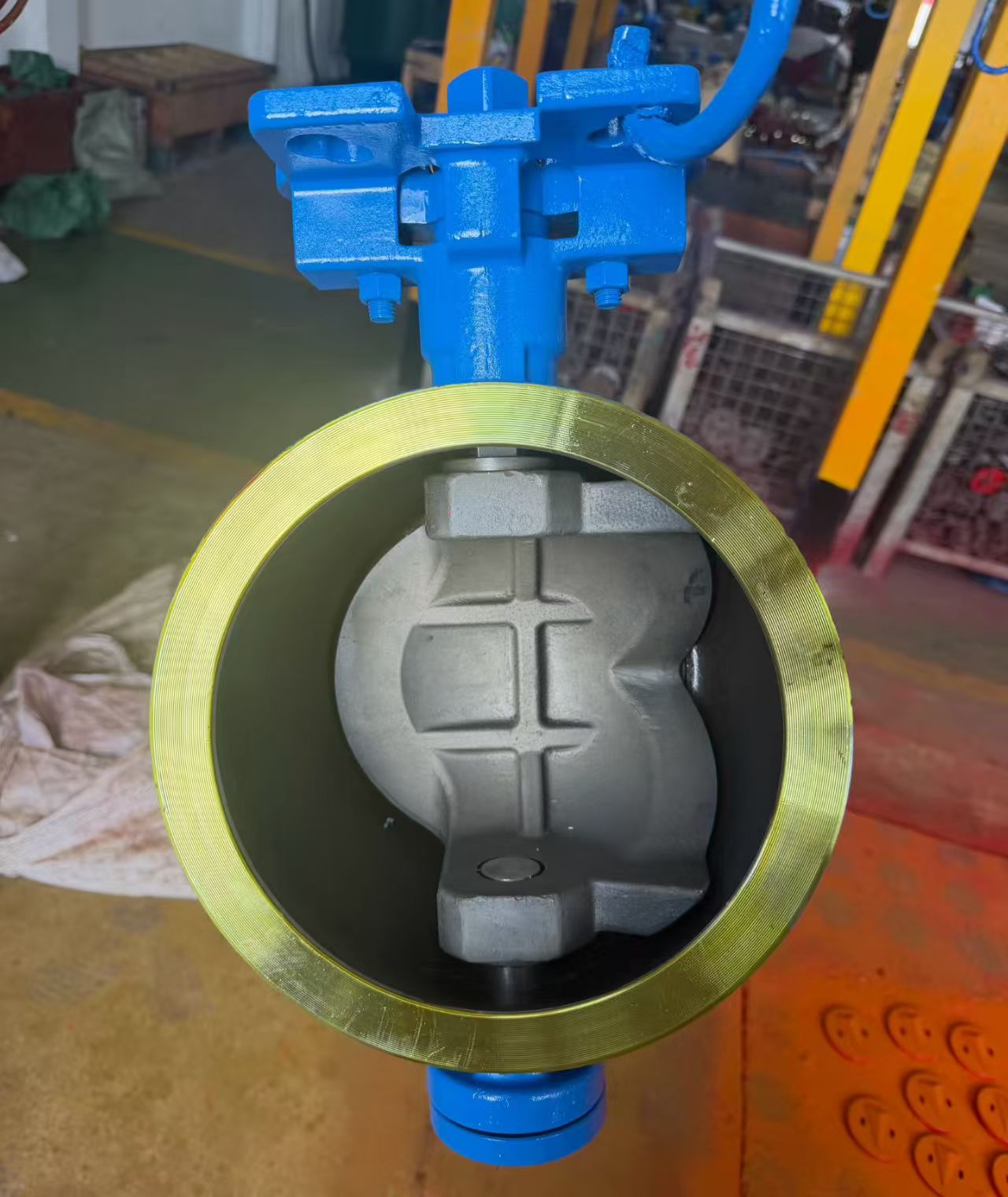
Compared with a standard ball valve, the V-notch design provides better flow control. A normal ball valve opens quickly and is mainly used for shutoff. A V-notch ball valve provides a more controlled opening curve, making it suitable for modulating service.
Compared with a globe control valve, a V-notch ball valve usually offers higher flow capacity and a more open flow path. This is useful when the medium is viscous, fibrous or contains suspended solids.
The V-shaped edge can also create a shearing effect against the seat. This helps cut through fibrous material and reduce dragging or buildup during closing. That is why V-notch ball valves are widely used in industries such as pulp and paper, wastewater, chemical processing, slurry handling and other services involving solids or fibers.
Why V-Notch Ball Valves Are Suitable for Palm Oil Mill Media
Palm oil mill media can be difficult for standard valves because it may be hot, sticky, fibrous or mixed with solids. A valve used in this environment should not only open and close; it should also avoid clogging, maintain flow capacity and handle repeated operation.
V-notch ball valves offer several advantages:
- Good control performance for flowable slurry-like media.
- High flow capacity compared with many linear control valves.
- Rotary quarter-turn operation.
- Shearing action for fibrous material.
- Better throttling behavior than standard ball valves.
- Compact structure for automated valve packages.
- Suitable for pneumatic actuators and positioners.
For palm oil mills, this makes the V-notch ball valve a practical choice in applications where the process stream is not clean enough for a conventional globe control valve and needs better control than a simple on-off valve.
Pneumatic V-Notch Ball Valves in Palm Oil Mills
Pneumatic actuation is especially useful in palm oil mills because plants often already have compressed air systems. A pneumatic V-notch ball valve can be used as either an automated on-off valve or a modulating control valve.
For on-off service, the valve may use a pneumatic actuator, solenoid valve and limit switches. This is useful where the valve operates frequently or is installed in a hot, dirty or hard-to-reach area.
For control service, the valve may use a pneumatic actuator with a valve positioner. The positioner receives a control signal and adjusts the valve opening, allowing the process to regulate flow more consistently.
Typical pneumatic accessories may include:
- Pneumatic actuator.
- Solenoid valve.
- Air filter regulator.
- Limit switch.
- Valve positioner.
- Manual override.
In new Indonesia palm oil mill projects, pneumatic valves can be planned during design. In existing mills, automation may begin with the most frequent or troublesome operation points.
Manual Valves and Control Valves: Both Are Needed
The palm oil industry does not need to replace all manual valves with automated valves. Manual valves remain practical for many services, especially where operation is occasional and the process does not require precise control.
Manual valves are suitable for:
- Maintenance isolation.
- Drain and vent points.
- Tank outlet isolation.
- Utility water lines.
- Low-frequency bypass lines.
- Pump isolation.
Control valves and pneumatic valves are more suitable for:
- Frequent operation.
- Remote control.
- Flow regulation.
- Process sequencing.
- Hot or difficult-to-access locations.
- Fibrous or particle-containing media that need controlled discharge.
For many Indonesian palm oil mills, the most realistic development path is gradual automation. Manual valves will continue to serve simple isolation duties, while pneumatic V-notch ball valves and other control valves will be added to selected process points where they create real value.
V-Notch Ball Valve vs Other Valve Types
Different valve types have different roles in a palm oil mill.
| Valve type | Typical role in palm oil mills | Limitation |
|---|---|---|
| Manual ball valve | Small line isolation | Not ideal for throttling or fibrous slurry. |
| Butterfly valve | Large water or low-pressure lines | Limited control accuracy in difficult media. |
| Gate valve | General isolation | Not suitable for control service. |
| Globe control valve | Steam, water or clean fluid control | Higher pressure drop and possible clogging in dirty media. |
| Knife gate valve | Sludge or slurry isolation | Limited modulation accuracy. |
| V-notch ball valve | Fibrous, viscous or particle-containing flow control | Must be selected according to actual media and duty. |
This comparison shows why V-notch ball valves have a specific but valuable role. They are not universal valves, but they are very useful where flow control and solids-handling performance are both required.
Why This Matters for Indonesia Palm Oil Projects
Indonesia palm oil mills are often built around practical operation, cost control and local maintenance capability. A valve solution must be reliable, easy to maintain and suitable for the actual process conditions.
For mill builders serving plantation owners, the opportunity is not simply selling more valves. It is helping the project choose the right valve for the right duty. Manual valves can handle basic isolation. Pneumatic valves can improve frequent operations. V-notch ball valves can solve specific control problems in fibrous and particle-containing media.
As Indonesian palm oil mills move toward larger capacity and more automation, V-notch ball valves may become more visible in selected process areas, especially around slurry-like oil streams, sludge handling and controlled discharge points.
Final Thoughts
The customer visit highlighted a useful application direction: V-notch ball valves can play an important role in palm oil mills, especially in Indonesia palm oil projects where fibrous and particle-containing media are common.
A V-notch ball valve is not used for whole fresh fruit bunch handling. That remains the job of conveyors, cages, ramps and mechanical equipment. But once the process stream becomes flowable and contains oil, water, fruit residue, fiber or sludge, a pneumatic V-notch ball valve can provide reliable control, high capacity and anti-clogging advantages.
For palm oil mill builders, the best valve strategy is balanced: use manual valves where simple isolation is enough, use pneumatic valves where remote or frequent operation is needed, and use V-notch ball valves where fibrous or particle-containing media require better control than ordinary valves can provide.
FAQ
What is the main use of a V-notch ball valve in a palm oil mill?
It is mainly used for flowable media that may contain fibers, particles, sludge or oil-water-solid mixtures. It provides better control than a standard ball valve and better solids-handling ability than many ordinary control valves.
Is a V-notch ball valve suitable for whole fresh fruit bunches?
No. Whole fresh fruit bunches are handled by mechanical equipment such as conveyors, loading ramps, cages and hoppers. V-notch ball valves are suitable for pumpable or flowable process streams.
Why use pneumatic V-notch ball valves?
Pneumatic V-notch ball valves allow remote operation, frequent cycling and modulating control when equipped with a positioner. They are practical for hot, dirty or difficult-to-access areas in palm oil mills.
Are manual valves still needed in palm oil mills?
Yes. Manual valves are still widely used for isolation, maintenance, drains, bypasses and utility services. Automation is most useful at selected high-frequency or process-critical points.
Need Help Selecting Palm Oil Mill Valves?
JIANENG Valve supplies V-notch ball valves, pneumatic valve packages, control valves and isolation valves for fibrous, slurry-like and industrial process media.
Contact Our Technical Team