A lugged butterfly valve and a wafer type butterfly valve can use the same basic disc, stem and seat design, but the valve body connection is different. A wafer type butterfly valve is clamped between two pipe flanges by long bolts or studs that pass around the valve body. A lugged butterfly valve has lugs around the body, usually with threaded holes, so each flange can be bolted to the valve separately.
This difference affects installation, end-of-line service, maintenance access, cost, weight and how the valve behaves when one side of the piping is removed. Wafer type butterfly valves are compact and economical for general inline service. Lugged butterfly valves are usually preferred when the system may need downstream pipe removal, dead-end service or more independent flange bolting.
This guide compares lugged and wafer butterfly valves from a practical selection point of view for water treatment, HVAC, chemical process, utility, marine, power, mining and general industrial piping systems.
Quick Answer: Lugged vs Wafer Butterfly Valve
Choose a wafer type butterfly valve when the valve will stay between two flanges, the application is general inline service, cost and space matter, and end-of-line isolation is not required.
Choose a lugged butterfly valve when the valve may need to remain installed while one side of the piping is removed, when dead-end service is required, or when the project specification calls for independent bolting on both flanges.
In simple terms:
- Wafer type butterfly valve: clamped between two flanges with through-bolts or studs.
- Lugged butterfly valve: bolted to each flange through lugs on the valve body.
- Wafer design is lighter, simpler and usually less expensive.
- Lugged design is heavier and more expensive, but offers better maintenance flexibility.
- A lugged valve may be suitable for end-of-line service only when the manufacturer rates it for that condition.
Lugged vs Wafer Type Butterfly Valve at a Glance
| Comparison factor | Wafer type butterfly valve | Lugged butterfly valve |
|---|---|---|
| Body connection | Clamped between two pipe flanges | Bolted to each flange through body lugs |
| Bolting method | Long through-bolts or studs connect both flanges | Shorter bolts usually connect each flange separately |
| End-of-line service | Not normally used unless specially designed and rated | Often selected for dead-end or downstream pipe removal service |
| Installation weight | Lighter | Heavier |
| Cost | Usually lower | Usually higher |
| Alignment | Requires careful centering between flanges | Lugs help locate the valve body |
| Maintenance flexibility | Both flanges normally need to remain in place | One side of the piping may be removed if the valve is rated and installed correctly |
| Typical use | General inline isolation and control | Dead-end service, maintenance isolation and more demanding piping layouts |
| Common applications | HVAC, water, utilities, light process service | Water treatment, marine, chemical, fire protection, industrial process lines |
What Is a Wafer Type Butterfly Valve?
A wafer type butterfly valve is a butterfly valve body designed to fit between two pipe flanges. The body is usually narrow, compact and lighter than a flanged valve. It may have small locating holes or ears to help with alignment, but the main holding force comes from the flange bolts or studs that pass from one flange to the other.
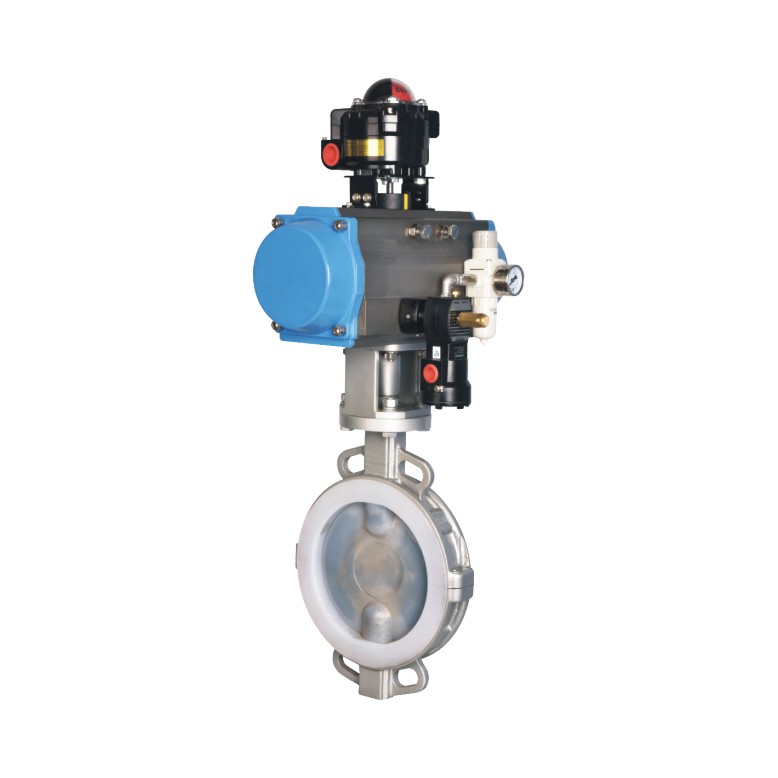
The valve is installed by placing it between two mating flanges, aligning the bolt holes, inserting the bolts or studs, and tightening the flanges evenly. The valve body is compressed between the flanges, and the resilient seat often provides sealing against the flange faces.
Wafer type butterfly valves are common in:
- HVAC chilled water and condenser water systems
- Water treatment plants
- Cooling water lines
- Fire water and utility water systems
- Air and low-pressure gas service
- General industrial isolation
- Compact process skids
The main advantage is economy. A wafer body uses less material, takes less space and is easy to automate with manual levers, gearboxes, pneumatic actuators or electric actuators.
The main limitation is that the valve usually depends on both pipe flanges being present. If the downstream flange or pipe is removed, a standard wafer valve may not be safely retained or sealed. For dead-end service, check the manufacturer's design and pressure rating carefully.
What Is a Lugged Butterfly Valve?
A lugged butterfly valve has external lugs around the valve body. These lugs line up with the flange bolt holes. In many designs, the lug holes are threaded, allowing bolts to be installed from each side of the valve instead of passing all the way through both flanges.
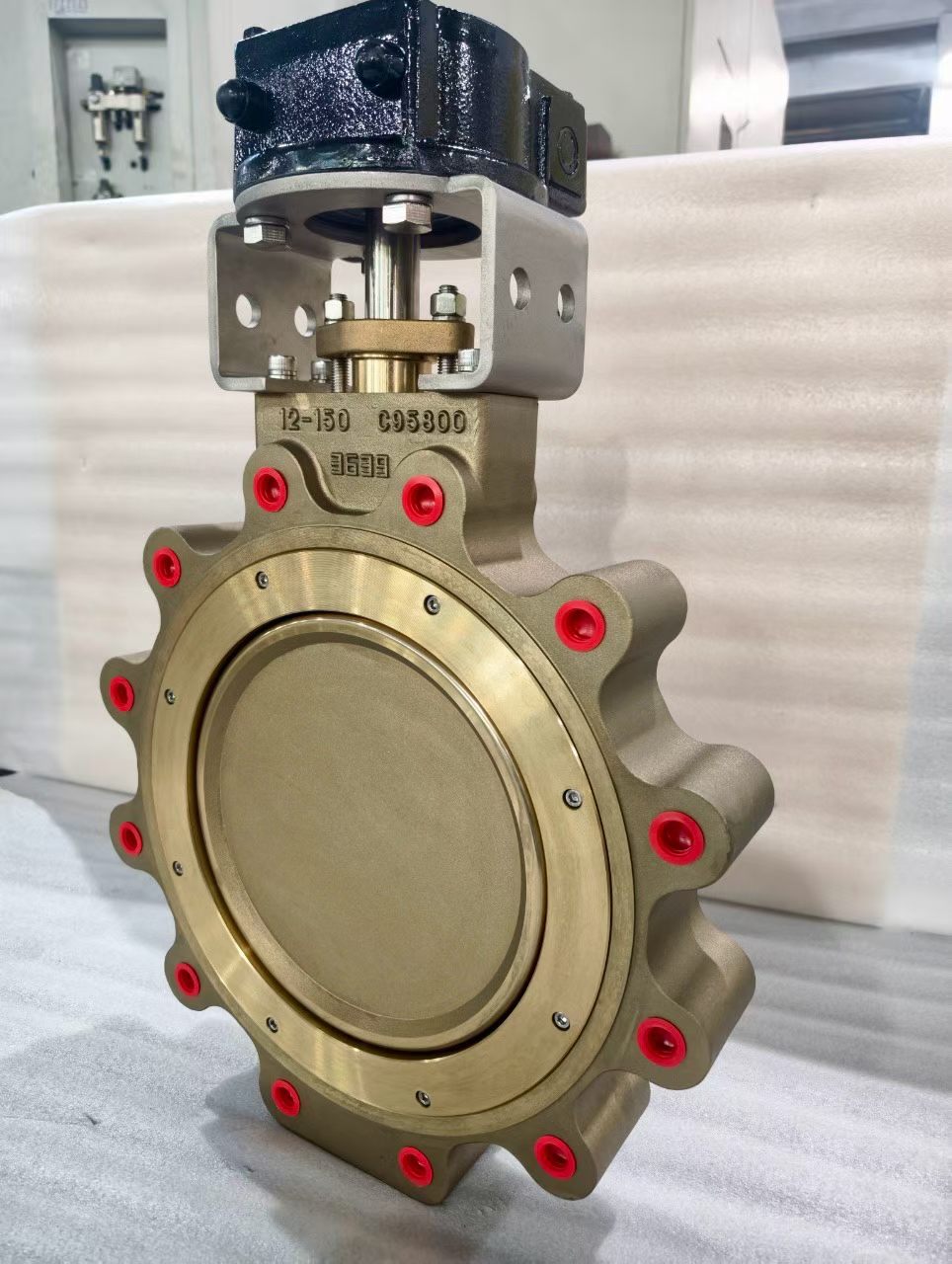
This construction allows each pipe flange to be connected to the valve body more independently. If the valve is designed and rated for the duty, one side of the pipeline may be removed while the valve remains bolted to the other flange. This is one reason lugged butterfly valves are often chosen for end-of-line service, tank outlets, pump isolation and maintenance sections.
Lugged butterfly valves are common in:
- Pump discharge and suction isolation
- Tank outlet lines
- Water treatment equipment
- Marine piping systems
- Chemical and utility process lines
- Fire protection systems
- Piping sections that need easier maintenance access
A lugged design is usually stronger and more flexible than a wafer body for installation planning, but it is also heavier and more expensive. The lugs, threaded holes and larger body casting require more material and machining.
Main Structural Difference
The main structural difference is the body connection.
In a wafer type butterfly valve, the valve body is held in position by the compression of the two pipe flanges and the long bolts or studs that join those flanges. The valve is sandwiched between the flanges.
In a lugged butterfly valve, the valve body has lugs that provide bolt locations around the body. The valve can be fastened to each flange directly. Depending on the design, bolts may be installed from both sides and may not pass through the entire flange-valve-flange assembly.
This difference does not automatically mean the internal sealing parts are different. Both valve types may use similar discs, stems, bushings and seats. Both may be supplied with EPDM, NBR, PTFE, metal or other seat materials depending on the service. The connection style mainly changes installation and piping flexibility.
Installation Difference
Installation is one of the most important reasons to compare lugged and wafer butterfly valves.
For a wafer type butterfly valve, the installer normally positions the valve between two flanges, inserts several lower bolts or studs to support the valve, centers the body, checks disc clearance, then installs and tightens the remaining bolts in a cross pattern. The valve must be centered carefully so the disc does not rub the pipe, flange or gasket area during operation.
For a lugged butterfly valve, the body lugs help locate the valve on the flange bolt pattern. The installer bolts each side to the valve body. This can be easier in some piping arrangements because the valve can be fixed to one flange before the other side is completed.
For both types, good installation practice matters:
- Keep the disc slightly open during installation to avoid seat damage.
- Confirm the disc can rotate without hitting the pipe or flange bore.
- Use the correct flange standard, pressure class and bolt length.
- Tighten bolts evenly in a cross pattern.
- Do not overtighten resilient seats.
- Do not add flange gaskets unless the valve manufacturer requires them.
- Make sure the pipe flanges are aligned and parallel before tightening.
Incorrect installation can cause leakage, high torque, seat deformation, disc rubbing or short service life.
End-of-Line and Dead-End Service
End-of-line service is the biggest practical difference between the two designs.
End-of-line service means the valve is installed at the end of a pipe or the downstream piping may be removed while pressure remains on the upstream side. This condition creates a different load on the valve body, seat and bolting than normal inline service.
A standard wafer type butterfly valve is not normally selected for this condition because it is designed to be clamped between two flanges. Without the downstream flange, the valve may not have the same support or sealing arrangement.
A lugged butterfly valve is often selected for end-of-line service because the body can be bolted to one flange. However, this does not mean every lugged valve can automatically handle full rated pressure as a dead-end valve. Some lugged valves have a reduced dead-end pressure rating, especially in larger sizes, lower strength body materials or resilient seated designs.
Before using a lugged butterfly valve for dead-end service, confirm:
- The manufacturer's dead-end pressure rating
- Flow direction, if the valve has a preferred direction
- Whether the downstream flange must remain installed
- Seat material and body material limits
- Bolt engagement and bolt strength
- Whether a blank flange is required for safety
For critical service, never assume end-of-line capability from the word "lugged" alone.
Pressure, Size and Standards
Both lugged and wafer butterfly valves are available in many sizes and pressure classes. The correct choice depends on flange standard, pressure rating, temperature, medium, seat material and operation method.
Common project specifications may reference standards such as API 609, MSS SP-67, EN 593, ISO 5752, EN 558, ASME B16.5, ASME B16.47, EN 1092 or JIS flange standards. The exact standard depends on the market and project requirement.
Important data to confirm includes:
- Nominal size, such as DN50 to DN1200 or 2 in to 48 in
- Flange standard and pressure class
- Face-to-face dimension
- Body material, such as cast iron, ductile iron, carbon steel, stainless steel or alloy
- Disc material, such as ductile iron, stainless steel, duplex stainless steel or coated disc
- Seat material, such as EPDM, NBR, FKM, PTFE or metal seat
- Maximum working pressure
- Maximum and minimum temperature
- Valve torque under maximum differential pressure
- Manual, pneumatic or electric actuation requirement
The body connection is only one part of selection. A correct butterfly valve must also match the medium, corrosion conditions, temperature, pressure and required shutoff performance.
Cost and Weight Difference
A wafer type butterfly valve is usually less expensive than a lugged butterfly valve in the same size, pressure rating and material. The body is more compact and uses less metal. This makes wafer valves attractive for projects with many valves, limited space or lower budget.
A lugged butterfly valve costs more because the body includes lugs and threaded holes or reinforced bolt areas. It may also require more machining and stronger body design. The added weight may matter in large pipe sizes, skid-mounted equipment or systems with limited pipe support.
However, the lowest purchase price is not always the best choice. If the pipeline layout requires frequent maintenance, one-side pipe removal or end-of-line operation, the extra cost of a lugged valve may reduce shutdown time and make maintenance easier.
Maintenance Difference
In normal inline service, both valve types require similar maintenance. The main wear parts are the seat, stem seals, bushings and disc edge. The actuator or gearbox also needs inspection if the valve is automated or frequently operated.
The maintenance difference appears when the piping must be opened.
With a wafer type butterfly valve, removing one side of the piping normally affects the clamping force and installation stability of the valve. The valve may need both flanges in place for proper support and sealing.
With a lugged butterfly valve, the valve may stay bolted to one flange while the other side is removed, if the valve is rated for that condition. This can simplify pump maintenance, filter replacement, tank work or branch line modification.
For either design, maintenance planning should include:
- Lockout and pressure relief before service
- Confirmation that the valve is not trapped under pressure
- Seat inspection for cuts, swelling, hardening or chemical attack
- Disc edge inspection for corrosion, coating damage or abrasion
- Stem seal inspection for leakage
- Actuator torque and travel stop checks
If the valve is used for control service, also check valve positioner calibration, actuator sizing and whether the valve operates in a stable opening range.
Which Butterfly Valve Should You Choose?
Choose a wafer type butterfly valve when:
- The valve is used in normal inline service
- Both pipe flanges will always remain installed
- The application is cost-sensitive
- Space and weight are limited
- The medium is water, air, utility fluid or compatible process fluid
- The valve is used for general isolation or moderate control service
Choose a lugged butterfly valve when:
- End-of-line or dead-end service may be required
- One side of the piping may need to be removed for maintenance
- The valve is installed at a pump, tank, filter or equipment boundary
- The piping layout benefits from independent bolting
- The project specification requires a lug type body
- Maintenance flexibility is more important than lowest initial cost
For high temperature, high pressure, fire-safe, corrosive, abrasive or tight shutoff applications, the connection type is not enough. You also need to confirm body material, seat design, disc material, shaft design, leakage class and applicable standards.
Application Examples
| Application | Recommended design | Reason |
|---|---|---|
| HVAC chilled water loop | Wafer type butterfly valve | Compact, economical and suitable for inline service |
| Cooling tower water line | Wafer type butterfly valve | Good choice for many large water lines |
| Pump isolation valve | Lugged butterfly valve | Easier maintenance if the pump side must be removed |
| Tank outlet valve | Lugged butterfly valve | Better suited for equipment boundary and possible dead-end service |
| General utility air line | Wafer type butterfly valve | Lightweight and cost-effective |
| Marine piping section | Lugged butterfly valve | Maintenance access and bolting flexibility are useful |
| Process skid with limited space | Wafer type butterfly valve | Short face-to-face and low weight |
| Filter inlet or outlet | Lugged butterfly valve | Allows easier filter removal or pipe section maintenance |
Common Selection Mistakes
One common mistake is choosing a wafer type butterfly valve for a location where downstream piping may be removed. If the valve is not rated for dead-end service, this can create a safety risk and leakage problem.
Another mistake is assuming every lugged butterfly valve can handle full pressure in end-of-line service. Some lugged valves have reduced dead-end ratings. Always check the manufacturer's datasheet.
It is also risky to ignore bolt length. For wafer valves, bolts must be long enough to connect both flanges correctly. For lugged valves with threaded holes, bolts that are too long may bottom out in the lug before clamping the flange properly. Bolts that are too short may not provide enough thread engagement.
Finally, some buyers focus only on body type and forget seat compatibility. EPDM may be suitable for many water services, NBR may be used for some oil-related service, PTFE may be selected for chemical resistance, and metal seats may be needed for higher temperature or more severe service. The right seat material depends on the medium, temperature and pressure.
Final Thoughts
The main difference between a lugged and wafer butterfly valve is the way the valve body connects to the pipe flanges. A wafer type butterfly valve is clamped between two flanges and is usually the lighter, simpler and more economical option for inline service. A lugged butterfly valve has body lugs that allow more independent bolting and may support downstream pipe removal or end-of-line service when properly rated.
For general water, HVAC and utility lines, wafer butterfly valves are often practical and cost-effective. For pump isolation, tank outlets, maintenance sections and possible dead-end service, lugged butterfly valves are usually the safer and more flexible choice.
The best selection depends on real piping conditions. Before ordering, confirm the flange standard, pressure class, temperature, medium, seat material, actuator torque and whether the valve must operate with one side of the piping removed.
FAQ
What is the main difference between lugged and wafer butterfly valves?
The main difference is the body connection. A wafer butterfly valve is clamped between two flanges using through-bolts or studs. A lugged butterfly valve has lugs around the body, allowing each flange to be bolted to the valve more independently.
What is a wafer type butterfly valve used for?
A wafer type butterfly valve is used for general inline isolation or flow control between two pipe flanges. It is common in HVAC, water treatment, cooling water, utility systems, air service and compact industrial piping where low weight and cost matter.
Can a wafer butterfly valve be used for end-of-line service?
A standard wafer butterfly valve is not normally used for end-of-line service because it depends on both flanges for support and sealing. Use it only if the manufacturer specifically rates that wafer valve design for the required dead-end pressure.
Can a lugged butterfly valve be used as a dead-end valve?
Many lugged butterfly valves are selected for dead-end service, but the rating must be confirmed. Some designs can handle full rated pressure, while others have a reduced dead-end pressure rating or require a downstream flange for safety.
Is a lugged butterfly valve better than a wafer butterfly valve?
A lugged butterfly valve is better when maintenance flexibility, one-side pipe removal or dead-end service is required. A wafer butterfly valve is better when the valve is used only inline and the project needs a compact, lightweight and economical design.
Are lugged butterfly valves more expensive?
Yes. Lugged butterfly valves are usually more expensive because the body has lugs, threaded holes or reinforced bolting areas. They also use more material and are often heavier than wafer type butterfly valves in the same size and pressure class.
Do wafer and lugged butterfly valves use the same actuator?
They can use similar actuators if the shaft connection, torque requirement and mounting dimensions match. Manual levers, gearboxes, pneumatic actuators and electric actuators can be used with both designs, but actuator sizing must be based on actual valve torque.
Need Help Selecting Butterfly Valves?
JIANENG Valve supports global buyers with butterfly valve type selection, material matching, actuator options and technical documentation for industrial piping systems.
Contact Our Technical Team