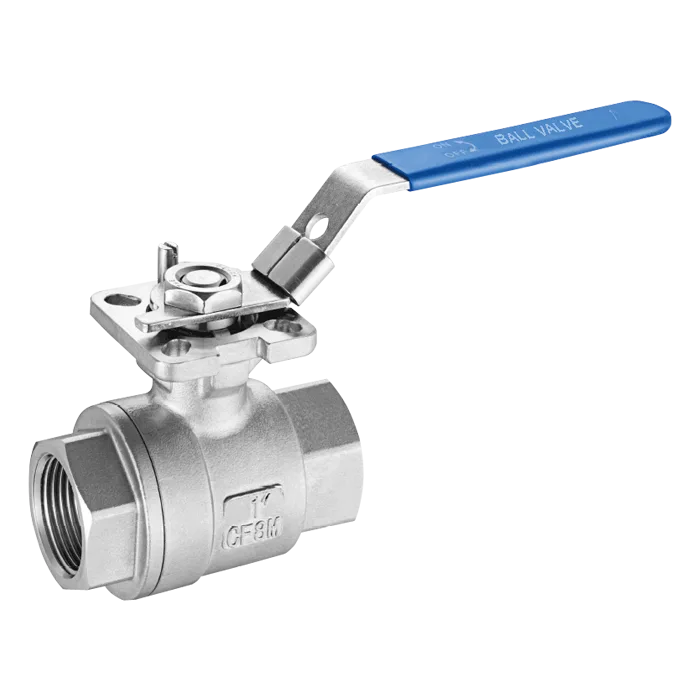
A threaded ball valve is a compact quarter-turn valve whose body connects directly to threaded pipe or fittings. It is often a practical choice for small industrial utility, water, air, gas and compatible chemical lines, but the connection is only reliable when the thread form, pressure–temperature rating, materials, bore and installation method all match the service.
This guide is for engineers, equipment builders, maintenance teams and buyers who need to prepare a technically complete ball valve inquiry. The short answer is simple: identify the exact mating thread first, then select the valve as a pressure-containing assembly rather than treating every "threaded" end as interchangeable.
Key Takeaways
- NPT, BSPT and BSPP are different connection systems; a familiar nominal size does not prove compatibility.
- The valve body style affects serviceability, leak paths and whether the valve can be removed without disturbing adjacent pipework.
- Full-port and reduced-port designs create different flow areas and pressure losses.
- Pressure rating must be checked at the actual operating temperature and for the selected body, seat, seal and end connection.
- Installation torque should be applied to the valve end being connected, not transmitted through the complete body.
What Is a Threaded Ball Valve?
A threaded ball valve uses a drilled ball as the closure member. Turning the handle or actuator approximately 90 degrees aligns the bore with the pipe for flow or rotates the solid side of the ball across the port for shutoff. Most standard designs are intended mainly for on-off isolation rather than continuous throttling.
The term describes the end connection, not one single valve construction. A threaded valve may have a one-piece, two-piece or three-piece body; a full or reduced bore; soft or metal seats; female, male or mixed ends; and manual or automated operation. Review the broader ball valve types guide before assuming that the connection defines the internal design.
Threaded ends can reduce flange bulk and eliminate field welding. They also create installation variables that flanged connections do not have, including thread engagement, sealant compatibility, tightening torque and the orientation reached when the joint becomes tight.
Thread Types: NPT, BSPT and BSPP
NPT
NPT is a tapered inch pipe thread widely used in North American piping and equipment. The taper and thread interference contribute to the joint, while an appropriate thread sealant is normally used to seal the helical leakage path. ASME B1.20.1 covers dimensions and gaging for NPT and related general-purpose inch pipe threads.
Do not identify an NPT connection from outside diameter alone. The nominal size, threads per inch, taper and gage acceptance all matter. Over-tightening can distort a small valve end or make future removal difficult.
BSPT
BSPT is also a tapered pipe-thread system, but its profile and dimensional series differ from NPT. The two can appear close in some nominal sizes, yet they should not be mixed. State the required thread designation and applicable standard on the datasheet or purchase order.
BSPP
BSPP is parallel rather than tapered. The joint normally depends on a separate sealing feature such as a bonded washer, gasket, O-ring face or correctly designed port, not on thread interference alone. A BSPP female port and a tapered male thread should not be combined unless the connection manufacturer explicitly approves that arrangement.
When the existing plant connection is uncertain, use a thread gauge and verified dimensional reference. A photograph and nominal pipe size are not enough for a production order.
Body and Bore Designs
One-piece, two-piece and three-piece bodies
A one-piece body is compact and has fewer body joints, but internal access is usually limited. A two-piece design commonly balances cost, availability and maintainability. A three-piece body can allow the center section to be removed while the end pieces remain connected, which may simplify maintenance when the piping arrangement provides adequate clearance.
Body construction is only one part of serviceability. Confirm whether the seat, packing and stem components are replaceable, whether the body joint is tamper resistant, and whether the installation allows the valve to be depressurized and removed safely.
Full port and reduced port
A full-port threaded ball valve has a bore closer to the connected pipe bore, which usually reduces restriction. A reduced-port design uses a smaller internal passage and may be more compact or economical. The exact bore and flow coefficient are manufacturer-specific, so use published dimensions or Cv/Kv data rather than the product name alone.
For a detailed comparison, see Full Port vs. Reduced Port Ball Valves. Pigging, slurry passage, drainage and allowable pressure loss can make the bore decision more important than purchase price.
How to Select a Threaded Ball Valve
- Define the fluid and operating envelope. State the fluid name, composition, solids or contamination, minimum and maximum temperature, normal pressure, design pressure and any vacuum condition. Identify whether the service involves oxygen, fuel gas, steam, corrosive chemicals, high-purity media or another duty requiring special cleaning, materials or testing.
- Specify the exact connection. Record nominal size, male or female ends, thread form, standard and any face-seal detail. If the valve joins dissimilar standards, use a properly engineered adapter rather than forcing the threads together.
- Select body, ball, stem and seats. Material compatibility must cover both corrosion and mechanical performance at temperature. Common metallic body choices include carbon steel, stainless steel and brass or bronze alloys, but the correct choice depends on the fluid, piping specification and project rules. Soft seats can provide low operating torque and tight shutoff; higher temperature, abrasive media or severe cycling may require another seat system.
- Confirm pressure–temperature rating. A pressure number printed in a catalog may apply only at a reference temperature. The usable rating can be limited by the body material, seat, seal, stem packing, end connection or governing standard. Check the complete pressure–temperature table and do not transfer a flange class directly to an unrelated threaded product.
- Choose operation and safety features. Manual valves need a suitable handle, travel stops and lockout approach. Automated valves need verified breakaway, running and seating torque, an actuator mounting interface, fail position, signal, accessories and environmental protection. Fire-tested design, antistatic features, stem retention, fugitive-emissions qualification and cavity relief should be specified only when the application or contract requires them and the offered design can document them.
API 608 is one relevant product standard for metal ball valves with flanged, threaded and butt-welding ends. The ball valve standards guide explains how a product standard, fire test, emissions requirement and project specification fit together.
Installation and Leakage Prevention
Keep debris, metal chips and excess sealant out of the valve. Apply a sealant that is compatible with the fluid, temperature and thread material, and follow its cure and application instructions. Starting one or two threads back from the end can reduce the chance of material entering the flow path, but the connection procedure should follow the project method.
Use a wrench on the flats or hexagon nearest the joint being tightened. Holding the opposite end can transmit torque through a two-piece or three-piece body joint and disturb its seal. Support the pipe so that the valve does not carry alignment loads, and avoid using the valve to pull misaligned pipe into place.
After installation, cycle the valve and perform the required shell or joint leak check at a controlled pressure. Never tighten a pressurized joint. For hazardous service, isolation, depressurization, draining and gas testing must follow the plant work procedure.
Torque discipline matters. Tightening one end while counter-holding the opposite valve end loads the body joint like a vice. Over a thermal cycle or vibration exposure this preload can creep, and a joint that was leak tight at commissioning may weep later. Always wrench on the connection being made and let the pipe supports carry line load.
Threaded vs Flanged vs Welded Ends
| Decision factor | Threaded end | Flanged end | Welded end |
|---|---|---|---|
| Typical advantage | Compact, no field welding | Repeatable bolted joint and easier removal | Fewer external leakage paths |
| Main installation variable | Thread form, sealant and torque | Gasket, alignment and bolt loading | Welding procedure and heat control |
| Maintenance access | Good on removable small-bore assemblies | Usually convenient | Requires cutting or designed access |
| Space and weight | Low | Higher | Low to moderate |
| Best fit | Small utility and equipment piping where permitted | Larger piping and frequent removal | High-integrity permanent piping where specified |
The table is a screening tool, not a design rule. Project piping codes, hazardous-area requirements, size, pressure, temperature, fatigue, corrosion allowance and maintenance philosophy can change the preferred connection.
Threaded Ball Valve RFQ Checklist
- Fluid, composition and cleanliness
- Minimum, normal and maximum temperature
- Operating and design pressure
- Nominal valve and pipe size
- NPT, BSPT, BSPP or other exact thread designation
- Female, male or mixed ends
- Full or reduced bore
- Body, ball, stem, seat and seal materials
- Required shutoff, test and leakage criteria
- Manual handle or actuator package
- Fire, emissions, antistatic, cleaning or certification requirements
- Quantity, documentation and inspection requirements
Common Selection Mistakes
- Ordering "1-inch threaded" without naming the thread system
- Assuming all stainless steel grades have the same corrosion resistance
- Comparing pressure ratings at different temperatures
- Using a standard on-off ball valve for continuous throttling
- Ignoring actuator torque growth with pressure, temperature or seat aging
- Applying tightening torque through the body joint
- Allowing sealant or debris to enter the ball cavity
- Treating a product-standard reference as proof of every project requirement
Frequently Asked Questions
Can NPT and BSPT threads be connected?
They should not be treated as interchangeable. Both are tapered systems, but their thread profiles and dimensional series differ. A joint may begin to engage and still have poor load distribution or sealing. Specify the correct mating standard or use an approved adapter.
Does a threaded ball valve need sealant?
Tapered pipe threads normally require a compatible sealant to close the helical leakage path and support assembly. Parallel threads generally need a separate sealing feature. Follow the connection and sealant manufacturer's instructions because fluid, temperature and material can restrict the choice.
Is a threaded ball valve suitable for steam?
It can be when the piping code permits threaded joints and the complete valve—including body, seats, packing and rating—covers the steam pressure and temperature. Steam service may also require attention to thermal cycling, condensate, orientation and safe isolation.
Can a threaded ball valve be automated?
Yes. Confirm valve torque at the worst operating condition, mounting geometry, actuator output, duty cycle, fail requirement, supply, signal, feedback and enclosure. A convenient mounting pad does not prove that the actuator is correctly sized.
Conclusion
Selecting a threaded ball valve starts with connection identification, then expands to the bore, body construction, materials, pressure–temperature envelope, shutoff requirement and operating method. The thread label is not a substitute for an application review, and the installation method can determine whether a suitable valve remains leak tight in service.
For a quotation or technical review, share the fluid, pressure, temperature, pipe and thread standard, bore requirement, materials, operation and applicable project standards. Jianeng Valve can help organize the specification and identify missing selection data before production. Our threaded, flanged and welded ball valve range can be reviewed alongside the matching pneumatic and electric actuators when the service moves beyond manual operation.
Technical Sources
- American Society of Mechanical Engineers — ASME B1.20.1, Pipe Threads, General Purpose, Inch
- American Petroleum Institute — API Standards Digital Catalog, including API 608
Sources verified August 28, 2026.
Need Help Specifying a Threaded Ball Valve?
Share the fluid, pressure, temperature, thread standard, bore requirement, materials, operation and applicable project standards. JIANENG Valve can help organize the datasheet and identify missing selection data before production.
Discuss Your Application