Ball valve types are not interchangeable simply because they share the same pipe size and pressure class. A floating full-port valve, a trunnion-mounted pipeline valve, a three-piece threaded valve and a characterized V-port valve solve different isolation, control, maintenance and automation problems.
The useful selection question is not “Which ball valve is best?” It is “Which construction matches the medium, pressure, temperature, flow function, shutoff requirement, connection and maintenance plan?” This guide organizes the main designs so an inquiry can become a technically usable specification.
Quick Answer: What Are the Main Ball Valve Types?
Ball valves are commonly classified by body construction, ball support, bore size, port arrangement, seat design, entry style, end connection and operating method. A complete description combines the relevant categories instead of naming only one.
| Classification | Common options | Main decision |
|---|---|---|
| Body construction | One-piece, two-piece, three-piece, fully welded | Cost, access and maintenance |
| Ball support | Floating, trunnion mounted | Size, pressure, torque and seat loading |
| Bore | Full port, reduced port, V-port | Pressure loss, pigging and control |
| Port arrangement | Two-way, L-port, T-port, four-way | Isolation, mixing or diverting |
| Seat | Soft seated, metal seated | Shutoff, temperature and solids |
| Entry | Side entry, top entry, end entry | Assembly and service access |
| Connection | Threaded, socket weld, butt weld, flanged | Piping standard and maintenance |
| Operation | Lever, gearbox, pneumatic, electric | Torque, speed, fail action and control |
Ball Valve Types by Body Construction
One-piece ball valve
A one-piece body minimizes body joints and is usually compact and economical. Internal access is limited, and the bore may be reduced. It is common in moderate water, air and utility isolation where simple construction matters more than in-line repair.
Two-piece ball valve
A two-piece valve normally has a main body and an end connector. It balances cost, flow capacity and serviceability and is widely used with threaded or flanged ends. Confirm whether the piping arrangement allows removal without disturbing adjacent pipework.
Three-piece ball valve
A three-piece valve has a center body held between two end connectors. With a suitable installation, the center section can be removed or swung out while the connectors remain in line. This supports inspection, cleaning and seat replacement in chemical skids, packaged equipment and automated assemblies.
Fully welded ball valve
A fully welded body removes bolted body joints. It is often selected for buried pipelines and district-energy systems where long-term access and external leakage paths are concerns. The owner should define whether the valve will be replaced or serviced in place.
Floating vs Trunnion-Mounted Ball Valves
Floating ball valve
Differential pressure pushes the unsupported ball toward the downstream seat. The design is compact and common in small and medium sizes, but seat load and operating torque can rise with pressure and size.
Trunnion-mounted ball valve
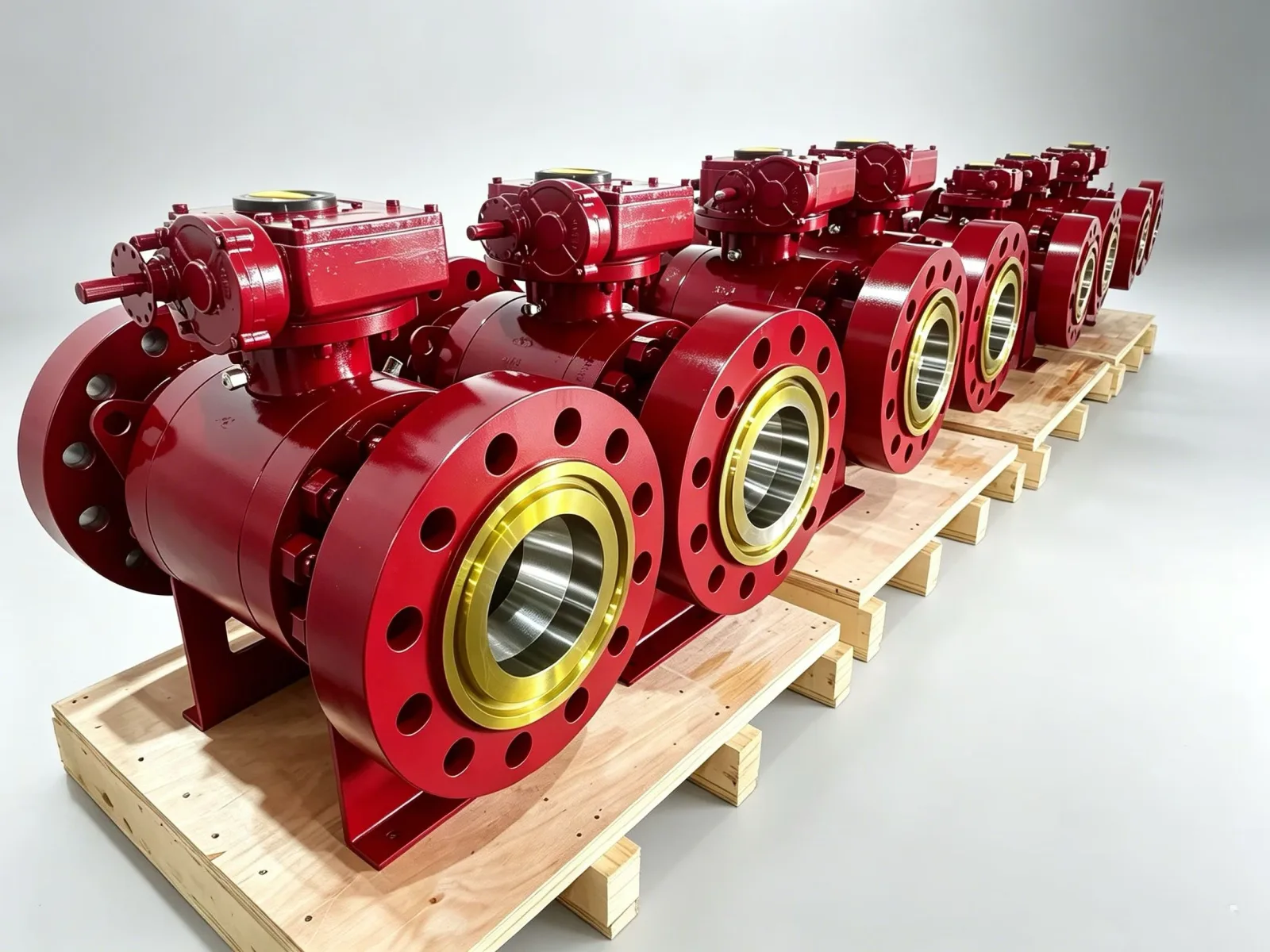
The ball is mechanically supported while the seats move toward it. This controls ball position and can reduce operating torque in larger, higher-pressure and pipeline applications.
Nominal diameter alone does not decide the support design. Review required torque, cavity-pressure behavior, seat arrangement, double-block-and-bleed function, fire testing, injection fittings and maintenance access. For a focused comparison, read floating vs trunnion-mounted ball valves.
Full Port, Reduced Port and V-Port Ball Valves
Full-port ball valve
A full-port or full-bore valve has a bore intended to approximate the connected pipe bore. It reduces restriction and is often chosen where pressure loss, line cleaning or pigging matters. Verify the actual bore against the governing product standard and manufacturer drawing.
Reduced-port ball valve
A reduced-port valve has a smaller flow passage. It can reduce body size, weight and cost but produces more velocity and pressure loss than a comparable full-port design. See the detailed full-port vs reduced-port comparison.
V-port ball valve
A V-port or characterized ball valve uses a shaped opening to create a more predictable relationship between rotation and flow area. It is intended for throttling or modulating service, normally with an actuator and positioner. A standard round-port isolation valve should not be assumed to provide the same control behavior.
For fibrous or slurry-like duties, valve geometry, seat protection and solids behavior require application review. See the guide to V-notch ball valves in palm-oil service.
Multi-Port and Entry Designs
Two-way valves provide the familiar open-or-closed path. Three-way ball valves use an L-port or T-port ball to select, divert or mix flow. The actual port diagram matters more than the label because different handle or actuator positions connect different paths. Review our L-port vs T-port flow-path guide before specifying a multi-port valve.
Four-way valves support more complex routing and require a defined flow diagram and operating sequence. Side-entry valves are assembled from the side. Top-entry valves provide internal access from above where removing the complete valve is difficult. Entry style should follow the owner’s maintenance philosophy.
Seat, Material and Connection Choices
Soft polymer seats can provide tight shutoff with relatively low torque, but pressure, temperature, chemical and wear limits must match the service. Metal seats are used for higher temperature, abrasive media, severe pressure drop or fire-related requirements; leakage class and torque still need to be specified.
Body and trim materials can include carbon steel, stainless steel, duplex grades, nickel alloys, brass, bronze or engineering plastics. Compatibility depends on fluid concentration, temperature, contaminants, cleaning chemicals and corrosion mechanism.
Threaded connections are compact at smaller sizes. Socket-weld and butt-weld ends reduce removable joints but change installation and maintenance. Flanged ends simplify removal and align with defined piping classes. The ASME B16.34 overview describes its scope for metallic valve pressure-temperature ratings, materials, testing and marking; the project specification must identify the applicable edition and related piping standards.
Manual and Automated Ball Valves
A lever is simple for small quarter-turn valves when manual force is reasonable. Gear operators reduce handwheel effort and slow movement on larger valves. Pneumatic actuators provide rapid cycling and can use spring return for a defined loss-of-air position. Electric actuators suit locations without compressed air or where electrical control and slower travel are acceptable.
Actuator selection should consider:
- Maximum differential pressure and break-to-open torque
- Running and end-to-close torque
- Seat material, temperature and cycle frequency
- Safety factor and air or electrical supply conditions
- Mounting interface, stem strength and bracket design
How to Select the Right Ball Valve Type
1. Define the function
State whether the valve will isolate, throttle, divert, mix, drain, sample or provide emergency shutdown. For accurate modulation, evaluate a characterized ball valve or dedicated control valve.
2. Record process conditions
- Fluid name, composition and solids content
- Minimum, normal and maximum flow
- Inlet and outlet pressure, including shutoff differential
- Normal and design temperature
- Pipe size, schedule and piping class
- Cycling frequency, operating time and upset conditions
3. Define shutoff and safety requirements
Specify flow direction, leakage criterion, seat arrangement, cavity relief, fire test, antistatic features, stem retention and any double-block-and-bleed requirement. Avoid “zero leakage” or “fire safe” without a named test method and acceptance criterion.
4. Select construction and materials
Choose body construction, ball support, bore, seat, trim, packing and end connection around the process and maintenance plan. Confirm whether the valve must be repairable without removing welded or fixed pipe sections.
5. Match the operator
For automation, define supply, signal, fail position, travel time, hazardous-area needs, feedback, solenoid valve, positioner, limit switches and manual override. Request the actuator sizing basis.
Ball Valve RFQ Checklist
| RFQ field | Information to provide |
|---|---|
| Service | Medium, concentration, solids, toxicity and cleanliness |
| Conditions | Flow, pressure, differential pressure and temperature |
| Function | Isolation, throttling, diverting, mixing or shutdown |
| Construction | Body pieces, floating/trunnion, entry type and bore |
| Materials | Body, ball, stem, seat, seals and packing |
| Ends | Thread, socket weld, butt weld or flange standard |
| Performance | Flow direction, leakage, fire test and cavity relief |
| Operation | Manual, gearbox, pneumatic or electric |
| Documentation | Datasheet, sectional drawing, test reports and material records |
Align bidders on valve pattern, bore, seat arrangement, pressure-temperature basis, materials, end connection, leakage criterion, testing and operator. List deviations separately and confirm that certificates and reports cover the offered size and construction.
Common Ball Valve Selection Mistakes
- Selecting by line size and pressure class without checking fluid and temperature
- Treating floating and trunnion designs as interchangeable
- Assuming every full-port valve has exactly the same bore as the pipe
- Using a standard round-port valve for precise throttling
- Ignoring trapped-cavity pressure in blocked-in liquid service
- Specifying a generic “PTFE seat” without confirming the compound and limits
- Buying an actuator before the valve torque is known
- Referring to a standard without naming its edition or project exceptions
Frequently Asked Questions
Which ball valve type is most common?
Two-piece floating ball valves are common in general industrial isolation at smaller and medium sizes. Larger diameter, high differential pressure, severe temperature, solids, pigging or special shutoff requirements can favor other designs.
What is the difference between one-piece and three-piece ball valves?
A one-piece valve is compact and economical but offers limited internal access. A three-piece valve has a removable center body that can simplify inspection or seat replacement when the piping arrangement allows it.
Is a full-port ball valve always better?
No. Full port is useful for low pressure loss, high flow capacity or pigging. A reduced-port valve may be smaller and less expensive when its added pressure loss is acceptable. Compare actual bore and Cv.
Can any ball valve be used for flow control?
A standard ball valve can restrict flow but may provide poor controllability and high velocity at small openings. For repeated modulation, use a valve designed and sized for control, such as a V-port ball valve.
When is a trunnion-mounted ball valve used?
Trunnion-mounted designs are often considered for larger sizes, higher pressures and pipeline service. The final decision should also examine seat arrangement, cavity relief, leakage, fire testing, maintenance access and the governing standard.
What information is needed to quote a ball valve?
Provide the medium, flow, pressure, temperature, pipe size, connection, valve function, material preferences, leakage requirement, standards and operator details. Automated valves also need supply, signal, fail position, travel time and feedback requirements.
Standards and Technical Sources
The applicable standard and edition must be selected for the project and valve construction. These official overviews provide useful scope information:
- ASME B16.34 — Valves, Flanged, Threaded and Welding End
- API Specification 6D, 25th Edition announcement
- ISO 17292:2015 — Metal ball valves for petroleum, petrochemical and allied industries
- Emerson Control Valve Handbook
Sources checked August 3, 2026.
Need Help Specifying a Ball Valve?
Share the operating conditions, piping class, shutoff requirement and actuator needs. JIANENG Valve can review the available data and help organize a technically comparable specification for quotation.
Discuss Your Application