
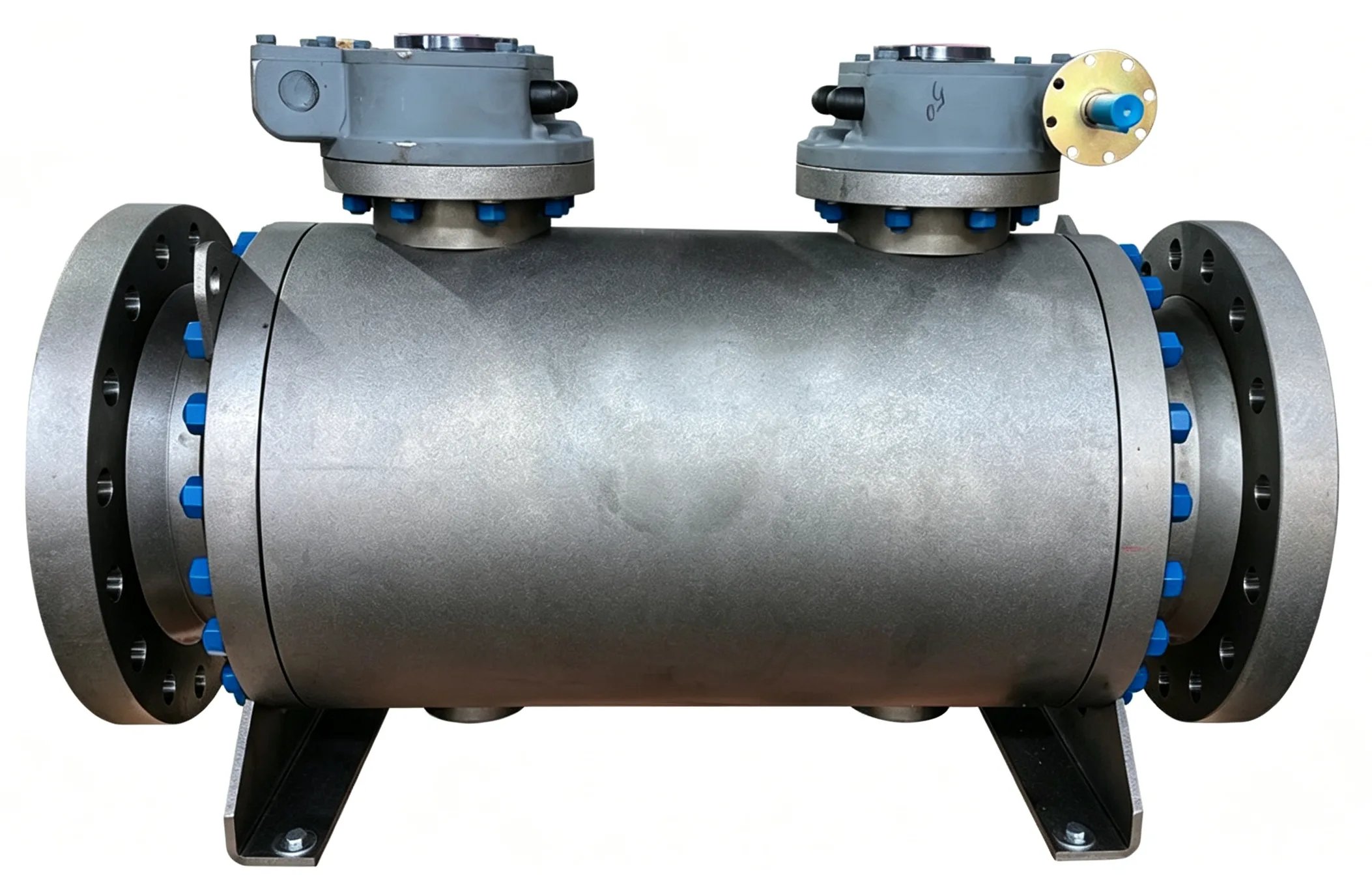
A double block and bleed valve provides two seating surfaces in one valve body, with a way to vent or bleed the cavity between them. The phrase “double block & bleed” is also used for a piping arrangement with two separate block valves and a bleed valve between them, so the required configuration and governing definition must be stated in every specification.
The most important safety point is that a cavity bleed indication does not replace the site’s isolation, lockout and verification procedure. Seat direction, trapped pressure, thermal relief, test method and the consequence of leakage must be reviewed for the actual system.
Key Takeaways
- “DBB” can mean a piping arrangement or a single valve with two seats and a cavity bleed.
- DBB and double isolation and bleed (DIB) are not interchangeable definitions.
- A valve’s seat direction determines how it isolates pressure and how leakage is monitored.
- Body-cavity pressure may rise from thermal expansion and needs a defined relief philosophy.
- Buyers should specify the applicable standard, seat configuration, flow direction, test method and required documentation.
What Is Double Block and Bleed?
In pipeline-valve terminology, a single-valve DBB design has two seating surfaces that seal against pressure from the two valve ends when closed, plus a means of venting or bleeding the cavity between the seats. In broader plant language, DBB can also describe two block valves in series with a small bleed valve draining the section between them.
These arrangements support isolation, cavity pressure monitoring, maintenance preparation, metering-system integrity and verification of seat leakage. They do not automatically provide the same risk reduction in every service. Fluid hazard, valve design, seat leakage, operating direction and the ability to prove isolation determine suitability.
DBB valves are often ball, gate or plug designs. Review the ball valve types guide for floating, trunnion, top-entry, welded-body and other construction choices that can affect seat behavior and maintenance.
Single-Valve DBB vs Three-Valve Arrangement
| Decision factor | Single-body DBB valve | Two block valves plus bleed |
|---|---|---|
| Number of pressure bodies | One main valve body | Two main block valves plus fittings |
| Space and weight | Usually lower | Usually higher |
| Bleed volume | Internal body cavity | Pipe spool between valves |
| Seat arrangement | Product-specific within one valve | Each block valve evaluated separately |
| Maintenance | Depends on body design and access | Individual components may be isolated or replaced |
| Specification risk | DBB terminology can hide seat-direction assumptions | Layout and valve functions are more visible |
A compact single valve can reduce joints and footprint, which is useful on skids, metering stations and offshore or space-constrained systems. A separate-valve arrangement may provide clearer physical separation or maintenance flexibility. Neither is automatically safer; the hazard analysis and isolation standard must define the required barriers.
DBB vs DIB
Double isolation and bleed is a different seating concept. In DIB, each of the two seats is capable of sealing against pressure from one source, and the cavity can be vented or bled. Depending on the design, this may create an additional barrier from one direction or both directions.
The terminology is frequently misunderstood because older plant practice, OSHA usage, API definitions and vendor descriptions may not use DBB in the same way. The SLB technical article on DBB and DIB emphasizes that application, media and environmental conditions should drive the choice rather than the abbreviation.
Do not write only “DBB required” on a purchase order. State whether the requirement is a piping arrangement or single valve, the pressure source direction, the seat sealing directions, how the bleed will be used and which definition applies.
Seat Design and Body Cavity
Self-relieving seats
A self-relieving seat can allow excessive body-cavity pressure to relieve toward a lower-pressure line side when its design differential is reached. This can protect the cavity from thermal expansion, but the relief direction and set behavior are product-specific. It also affects how the valve should be tested and interpreted.
Double-piston-effect seats
A double-piston-effect seat can use cavity pressure to increase sealing against the line side. This can support DIB arrangements, but it may trap cavity pressure and require a separate relief device. Terms such as SPE and DPE should be tied to a seat diagram and manufacturer documentation.
Floating vs trunnion ball support
Trunnion-mounted ball valves support the ball on bearings and use pressure-energized seats. Floating-ball valves allow the ball to shift toward the downstream seat. DBB capability depends on the complete seat design and test, not the ball-support label alone. See trunnion mounted vs floating ball valve for the mechanical comparison.
How to Select a DBB Valve
- Define the isolation objective. State whether the valve isolates a meter, tank, pump, pig launcher, terminal line, process skid or hazardous inventory. Identify which side can be pressurized, whether pressure can reverse and what work will be performed downstream.
- Choose the required arrangement. Decide between two separate block valves with bleed, an integrated modular assembly or a single pipeline valve with two seats. The choice affects face-to-face length, pressure drop, cavity volume, joints, maintenance and verification.
- Specify seat directions. Provide a seat diagram or written description for upstream, downstream and body-cavity pressure. Define DBB, DIB-1 or DIB-2 only through the governing standard and required seat behavior. Avoid vendor-specific shorthand without a diagram.
- Define bleed and relief connections. State bleed size, connection, valve, plug, discharge destination and operating procedure. Specify body-cavity relief philosophy for blocked-in liquid that can heat up. A vent to atmosphere may be unacceptable for toxic, flammable or environmentally regulated fluid.
- Select materials and standards. Provide fluid, composition, design pressure and temperature, corrosion allowance, body and trim materials, seal compatibility, sour-service requirement and fire or emissions qualification. API Specification 6D is a common reference for pipeline and piping valves, but edition, addenda, purchaser options and project deviations must be identified.
The ball valve standards guide explains how API 6D, API 608, ASME B16.34, fire testing and project documents relate.
Testing and Safe Operation
DBB testing must reproduce the specified pressure directions and monitor the correct cavity or seat leakage point. API 6D purchasing and test guidance distinguishes DBB and DIB seat tests. The inspection and test plan should record test medium, pressure, stabilization, duration, allowable leakage, direction and instrumentation.
Operational verification requires an approved plant procedure. A bleed connection can expose pressure or hazardous fluid, and opening it may create a release path. Personnel must isolate energy, depressurize, drain, purge, monitor and lock out equipment according to site rules and applicable regulation.
Never assume that no visible bleed flow proves zero pressure downstream. A blocked bleed, frozen line, trapped cavity, leaking valve or pressure source from another route can give a misleading result. Use independent pressure indication and the required positive-isolation method before intrusive work.
A bleed is not proof of isolation. A DBB or DIB configuration supports verification, but it does not replace a plant isolation, lockout and positive-pressure-indication procedure. Specify the seat test, seat direction and bleed operating rule; then follow the site procedure for intrusive access.
DBB Valve RFQ Checklist
- Governing DBB or DIB definition and standard edition
- Single valve, modular assembly or three-valve arrangement
- Valve type, size, pressure class and bore
- Upstream, downstream and reverse pressure cases
- Seat direction diagram and cavity behavior
- Bleed connection size, valve and discharge destination
- Body-cavity thermal relief method
- Fluid, temperature and material requirements
- Fire, fugitive-emissions and sour-service requirements
- Shell, seat, DBB/DIB and functional tests
- Actuator, fail action, signal and partial-stroke requirements
- Material certificates, inspection plan and test records
Common Specification Mistakes
- Writing “DBB” without defining the arrangement
- Confusing DBB with DIB
- Omitting seat sealing direction
- Ignoring body-cavity thermal expansion
- Venting hazardous fluid to an unsafe location
- Assuming full port, fire safe or low emissions without documentation
- Using a cavity bleed as the only proof of safe isolation
- Accepting a certificate whose scope, edition or manufacturing site does not match the offered valve
Frequently Asked Questions
Is a double block and bleed valve the same as two valves?
Not always. The phrase can describe two block valves with a bleed valve between them or a single valve body with two seating surfaces and a cavity bleed. The specification must define which arrangement is required.
What is the difference between DBB and DIB?
DBB and DIB use different seat-sealing definitions. DBB seats seal against pressure from the valve ends with a cavity bleed. DIB provides two isolation seats configured to seal against pressure from a defined single source. Use the governing standard and a seat-direction diagram.
Does DBB mean zero leakage?
No. Seat tests have stated media, pressure and allowable leakage. Operational safety also depends on valve condition, pressure direction, the bleed path and the plant isolation procedure. Specify the acceptance criteria and required barrier verification.
Why does the body cavity need pressure relief?
Liquid trapped between closed seats can expand as temperature rises. Without an approved relief path, body-cavity pressure may exceed safe limits. The solution can be self-relieving seats or a dedicated relief system, depending on the seat design and fluid.
Conclusion
A double block & bleed valve must be specified by function, seat direction, cavity behavior, testing and safety procedure—not by abbreviation alone. DBB, DIB and a three-valve arrangement create different barriers and verification methods.
For a DBB valve review, share the process diagram, fluid, pressure directions, temperature, required standard, seat philosophy, bleed destination, relief method and inspection plan. Jianeng Valve can help organize the technical inquiry and identify unresolved configuration questions before quotation.
Technical Sources
- SLB — How It Works: Double Block-and-Bleed and Double Isolation-and-Bleed
- American Petroleum Institute — API Standards Digital Catalog (API Specification 6D)
- American Petroleum Institute — API Monogram and APIQR Latest Updates
Sources verified August 28, 2026.
Need Help Specifying a DBB or DIB Valve?
Share the process diagram, fluid, pressure directions, temperature, required standard, seat philosophy, bleed destination, relief method and inspection plan. JIANENG Valve can help organize the technical inquiry and clarify configuration questions before quotation.
Discuss Your Application