
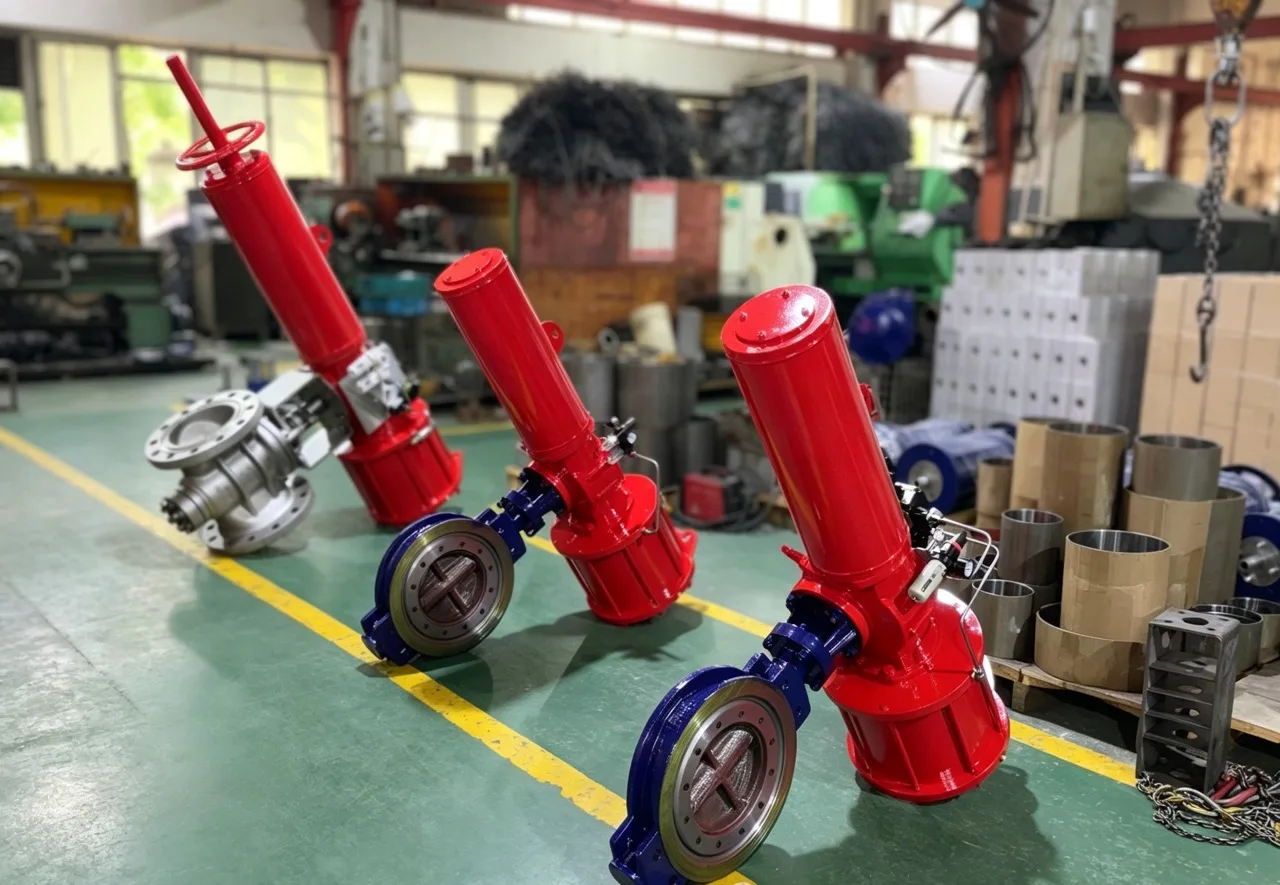
A triple eccentric butterfly valve, also called a triple offset butterfly valve, uses three geometric offsets to move the disc away from the seat with minimal rubbing during most of its travel. The design is commonly considered when a project needs compact quarter-turn operation, metal seating, higher temperature capability or repeatable shutoff in a demanding process.
The important buying point is that "triple eccentric" describes geometry, not a complete performance specification. Seat design, sealing direction, torque, pressure–temperature rating, test method, body style, materials and actuator sizing still have to be stated and verified.
Key Takeaways
- The first two offsets move the shaft away from the seat and pipe centerlines; the third changes the sealing geometry to reduce sliding contact.
- Many triple eccentric designs use metal seats, but leakage class and direction remain design- and test-specific.
- Low friction can reduce running torque, yet actuator sizing must still include seating, differential-pressure and dynamic torque.
- API 609 can be relevant to offset butterfly valves, but the purchase order must state category, body style, size, class, direction and optional requirements.
- A triple offset valve is not automatically the best option for every water, slurry, corrosive or control application.
What Is a Triple Eccentric Butterfly Valve?
A triple eccentric butterfly valve is a quarter-turn rotary valve whose shaft, disc and sealing surface are intentionally offset. As the valve begins to open, the disc seal separates from the body seat rather than scraping along it through the full stroke. Contact is concentrated near final closure, where torque loads the sealing pair.
This geometry supports metal-seated designs because it limits the continuous rubbing that would otherwise damage hard sealing surfaces. Manufacturers use different seat-ring constructions, flexibility features and torque-seating principles, so the user must evaluate the offered design rather than relying on the category name.
Butterfly valves can serve isolation, control or combined duties. For modulation, review the butterfly valve throttling guide because disc angle, installed characteristic, cavitation, velocity and actuator behavior remain important even when the sealing geometry is advanced.
How the Three Offsets Work
First offset: shaft relative to the seat plane
The shaft is positioned away from the sealing plane. This helps move the disc out of the seat as rotation begins and creates room for the disc and sealing components.
Second offset: shaft relative to the pipe centerline
The shaft is also displaced from the valve or pipe centerline. Together, the first two offsets create a cam-like motion that reduces interference between disc and seat.
Third offset: angled sealing cone
The sealing surface is based on an inclined conical geometry rather than a simple circular contact. This third offset allows the sealing pair to disengage quickly during opening and approach contact near the closed position. The exact cone angle and seat construction are proprietary design details and should not be assumed across manufacturers.
The Valmet Neldisc technical documentation illustrates one implementation of triple eccentric geometry and explains how its disc and seat ring interact. That example is useful for understanding the concept, but performance data from one product family should not be transferred to another valve.
Triple Offset vs Double Offset vs Concentric
| Feature | Concentric | Double offset | Triple eccentric |
|---|---|---|---|
| Shaft/disc arrangement | Centered | Shaft offset from seat and centerline | Two shaft offsets plus conical sealing geometry |
| Common seat approach | Resilient or elastomer-lined | Resilient, polymer or metal depending on design | Often metal seated |
| Seat contact | More rubbing through travel | Reduced rubbing | Contact mainly near final closure |
| Typical strength | Simple, economical isolation | Broader pressure and temperature capability | Demanding shutoff, temperature or cycling duties |
| Key limitation | Seat wear and temperature limits can govern | Performance varies widely by seat design | Higher complexity and application-specific torque/testing |
The comparison is directional rather than absolute. A well-selected concentric valve can be more suitable for ordinary water service, while a double-offset valve may meet a project without the cost or torque profile of a triple eccentric design. The wafer-type butterfly valve guide covers a different decision: how the body mounts in the piping.
Where Triple Eccentric Valves Fit
Triple eccentric valves are often evaluated for steam, hot oil, thermal fluids, refinery and petrochemical service, industrial gas, power generation, large utility lines and other duties where compact geometry and metal seating are useful. Some designs are used for both control and isolation, while others are optimized mainly for shutoff.
Potential benefits include:
- Compact face-to-face dimensions compared with many linear valve bodies
- Quarter-turn operation and relatively low travel time
- Reduced seat rubbing during cycling
- Metal sealing options for higher temperatures
- High flow capacity for a given nominal pipe size
- Availability in wafer, lug and double-flanged configurations
These benefits do not remove service limits. Sticky or crystallizing media can collect around the seat. Abrasive solids can damage sealing surfaces. Highly corrosive fluids may require specialized alloys or lined designs. Very low differential pressure can expose seat-tightness limitations if the design depends on pressure direction or torque loading.
How to Select the Valve
- Define the process cases. Provide fluid, phase, composition, solids, minimum and maximum temperature, upstream and downstream pressure, flow range and operating frequency. For control duty, include minimum, normal and maximum flow with the pressure drop available at each case.
- State the function. Clarify isolation, emergency shutdown, control or combined service. Specify normal position, required fail position, closing time and whether the valve must close against flow from one or both directions. End-of-line or dead-end service must be stated because body and seat capability can differ.
- Select body style and piping interface. Choose wafer, lug or double flanged based on flange standard, maintenance, pipe loads, end-of-line requirement and project practice. Confirm face-to-face dimension, mating flange bore and disc clearance. A nominal match does not guarantee that the open disc will clear the pipe or liner.
- Define materials and sealing. Specify body, disc, shaft, seat ring, laminated seal components, packing and bolting as required. Ask which part is flexible, which surface is replaceable, and how thermal expansion is accommodated. State the shutoff criterion, test medium, direction, differential pressure and allowable leakage.
- Reference standards accurately. API 609 covers design, materials, face-to-face dimensions, pressure–temperature ratings, examination, inspection and testing for defined butterfly valve categories and body configurations. The API purchasing guidance also highlights information such as category, body style, flange details, direction, dead-end service, operator and materials. Use the correct edition required by the contract and list any deviations.
Actuator and Control Checks
A triple eccentric valve is torque seated, so actuator selection cannot rely on a generic size table. Obtain seating/unseating torque, bearing friction, packing friction, hydrostatic torque and dynamic torque at the actual differential pressure and flow direction. Include temperature effects, safety factor, frequency of operation and minimum available air pressure or voltage.
For on-off duty, verify breakaway torque, stroke time, travel stops, fail action, solenoid, limit switches and manual override. For modulating duty, add positioner resolution, deadband, control signal, feedback and cycle requirements. The actuator must reach the specified seat load without overloading the stem or sealing system.
Manual gear operators also need correct sizing and stop adjustment. See Butterfly Valve Gear Type: Operation and Selection Guide for worm-gear torque, ratio, handwheel effort and mounting checks.
Inspection and Documentation Checklist
- Applicable product and piping standards with editions
- Valve category, body style, size and pressure class
- Face-to-face and flange standard
- Flow direction and preferred stem orientation
- Body, disc, shaft, seat, packing and bolting materials
- Pressure–temperature rating
- Shell and seat test pressures, media and acceptance criteria
- Leakage class or allowable leakage, with test direction
- Valve torque data and actuator sizing basis
- Fire, fugitive-emissions, cryogenic or other special qualification
- Material certificates, inspection plan and test records
- Installation, operation and maintenance instructions
"Triple eccentric" is geometry, not a specification. Two suppliers can both call a valve "triple offset" yet offer different seat-ring constructions, flexible elements, pressure–temperature limits and torque profiles. Always request the actual shutoff class, test medium and direction, torque data and material list before comparing quotations.
Common Selection Mistakes
- Treating triple eccentric, triple offset and high-performance butterfly valve as identical specifications
- Assuming metal seated means zero leakage under every test condition
- Omitting sealing direction or dead-end service
- Selecting the actuator from nominal valve size only
- Ignoring dynamic torque during high-flow closure
- Failing to check flange bore and disc clearance
- Using a control valve without a Cv/Kv-versus-angle curve
- Citing API 609 without category, edition or purchaser options
Frequently Asked Questions
What is the difference between double offset and triple offset butterfly valves?
A double-offset valve moves the shaft away from the seat plane and valve centerline to reduce rubbing. A triple-offset valve adds an angled conical sealing geometry, allowing the disc and seat to disengage through most of the stroke and contact near final closure.
Is every triple eccentric butterfly valve metal seated?
Metal seating is common because the geometry reduces sliding contact, but the exact sealing construction varies. Confirm the seat and seal materials, flexibility mechanism, replacement method, leakage acceptance and pressure–temperature limits for the offered valve.
Can a triple eccentric valve be used for throttling?
Some designs can serve control duty, but the decision requires Cv/Kv data by opening angle, installed pressure drop, minimum controllable flow, velocity, cavitation or noise checks, dynamic torque and a modulating actuator. Triple eccentric geometry alone does not prove control performance.
Is flow direction important?
Yes. Preferred flow direction can affect seat loading, torque, control behavior and shutoff rating. Specify the required pressure direction and ask whether the valve is rated for bidirectional shutoff at the stated differential pressure.
Conclusion
A triple eccentric butterfly valve can combine compact quarter-turn operation with reduced seat rubbing and metal-seated shutoff. Its suitability still depends on the complete application: fluid, pressure, temperature, function, flow direction, materials, leakage, actuator torque, testing and documentation.
Share these operating conditions and the project standard before requesting a final model. Jianeng Valve can help review butterfly valve and actuator requirements, identify missing data and organize a technically comparable quotation.
Technical Sources
- American Petroleum Institute — API Standard 609 product announcement
- Valmet — Neles Butterfly Valve Series L1 and L2
- Valmet — Neldisc Triple Eccentric Sealing Design technical bulletin
Sources verified August 28, 2026.
Need Help Specifying a Triple Eccentric Butterfly Valve?
Share the fluid, pressure, temperature, function, body style, materials, shutoff requirement and project standard. JIANENG Valve can help review the application, identify missing selection data and prepare a technically comparable quotation.
Discuss Your Application