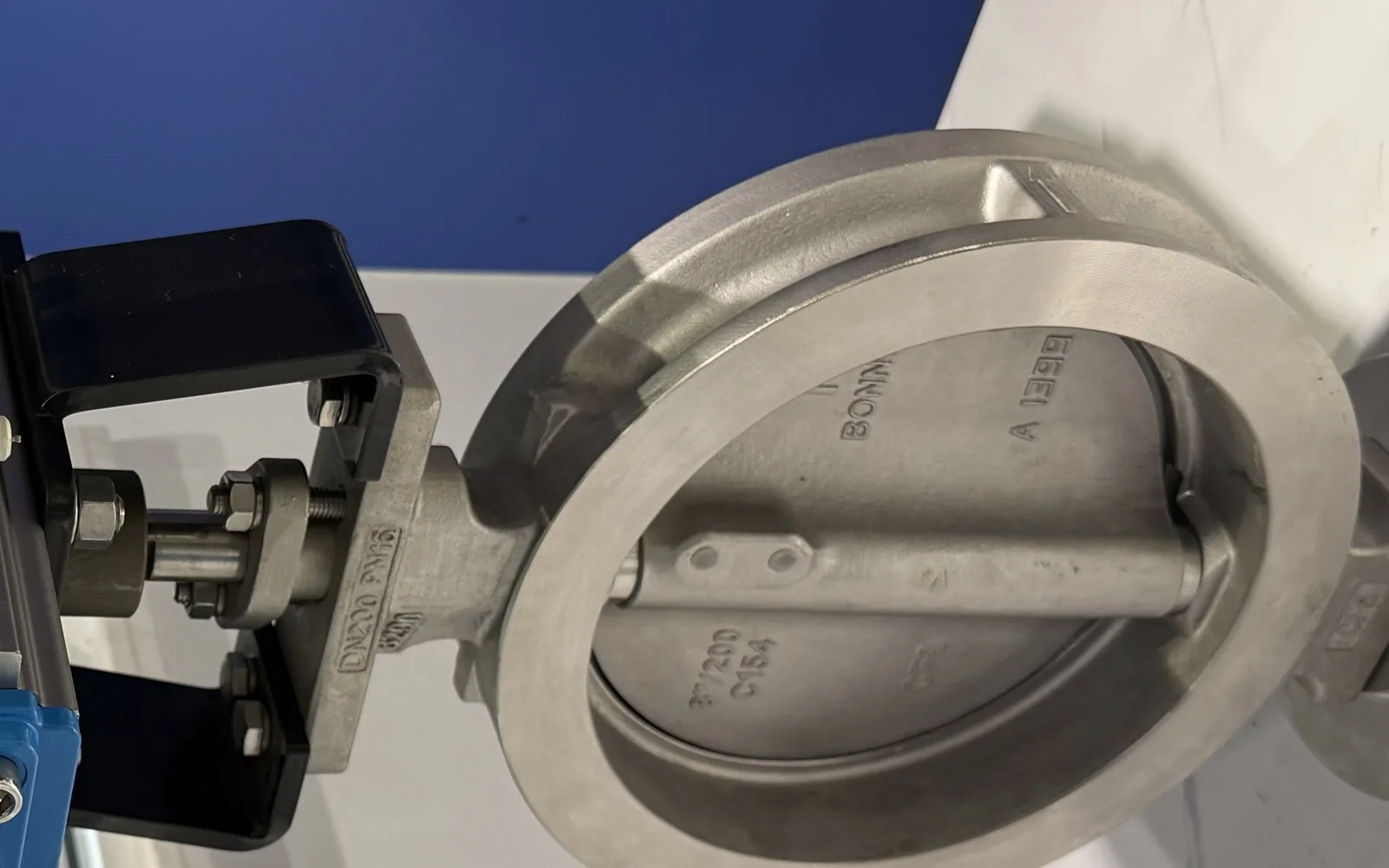
A concentric butterfly valve has a shaft centered on the disc and pipe bore, with the disc rotating within the seat to control the flow passage. Many industrial designs use a resilient seat that deforms around the disc edge to provide shutoff. This compact arrangement can suit compatible water, air and other utility services when pressure, temperature, materials and installation conditions are within the product’s rating.
For buyers, the most useful selection questions concern the seat and the installed assembly. A suitable body material cannot compensate for an incompatible elastomer, incorrect flange fit or insufficient actuator torque.
Key Takeaways
- “Concentric” describes the shaft and disc geometry; “wafer” and “lug” describe the body mounting style. They are separate fields in the specification.
- Resilient-seat compatibility depends on fluid, temperature, contamination and cleaning chemicals, not the elastomer family name alone.
- Pressure class is a designation, not a universal working-pressure limit. Check the actual pressure-temperature rating at the operating temperature.
- Actuator torque must be sized from the valve’s seating, unseating and running data, not a generic table.
- Some seats form the flange seal and prohibit extra gaskets; some require them. Follow the actual installation drawing.
How a Concentric Butterfly Valve Seals
The disc turns through approximately 90 degrees between its closed and open positions. In a typical resilient-seated design, interference between the disc edge and seat produces the sealing contact. The seat must accommodate that movement while resisting the fluid, temperature and repeated cycling.
The shaft passes through the disc center rather than being offset in the manner of a double eccentric design. As a result, the seat-contact behavior differs from offset valves. The practical consequences depend on seat profile, interference, material and assembly tolerances, so geometry alone does not predict operating torque or service life.
Many designs extend the liner over the body faces to form part of the flange seal. Others use different arrangements. For a documented example, Bray’s Series 30/31 design uses a molded seat feature that eliminates separate flange gaskets. This is a model-specific installation feature, not a rule for every butterfly valve.
Seat Material and Application Limits
Start with the fluid, not the seat color
Specify fluid composition, concentration, contamination, operating temperature and any cleaning chemicals. Include startup, flushing and sterilization conditions when they expose the seat to a different environment from normal service.
Elastomer names such as EPDM and NBR identify material families rather than a complete compatibility approval. Formulation, reinforcement and exposure conditions matter. A seat selected for a water line may be unsuitable if that line is periodically flushed with another chemical or carries oil contamination.
The following questions produce a more useful material review:
| Question | Why it matters |
|---|---|
| What does the fluid contain? | Trace contaminants may change compatibility |
| What are normal and maximum temperatures? | Short excursions can exceed the assembly’s limits |
| Is the service continuous or intermittent? | Exposure duration affects material assessment |
| Are solids present? | Abrasion and deposits can damage sealing surfaces |
| Is vacuum possible? | Liner retention and vacuum suitability need confirmation |
Check the entire wetted assembly
Do not assume a lined body means only the liner contacts the fluid. Confirm the manufacturer’s wetted-parts list, including disc, shaft regions, fasteners and seals. A corrosion-resistant disc with an unsuitable shaft seal can still be an incomplete selection.
For chemically demanding duty, other liner and disc systems may deserve review. Bray’s Series 22/23 lined butterfly valve information illustrates how lined-valve material options extend beyond ordinary utility elastomers. Use such examples to identify specification questions, not to transfer another product’s ratings to the offered valve.
Wafer, Lug and Flange Compatibility
“Concentric” identifies shaft and disc geometry. “Wafer” and “lug” identify body mounting arrangements. A concentric valve can use either mounting style, so these terms should occupy separate fields in the datasheet.
A wafer body is normally held between pipe flanges by through-bolting. A lug body provides individual mounting points, but end-of-line capability and its allowable differential pressure must be confirmed for the exact design. See What is the difference between a lugged and wafer butterfly valve? for the mounting comparison.
Check the pipe bore as well as the bolt pattern. The disc may project beyond the body as it opens. Thick-wall pipe, liners, adjacent reducers or nearby equipment can obstruct its sweep even when the valve’s nominal size matches the line.
For an illustrative DN100 replacement, collect the flange standard, pipe inside diameter, facing and available face-to-face space. A label reading “DN100 PN16” does not answer all those questions. Request the installation drawing and verify full disc movement in the proposed arrangement.
Actuation and Throttling
A lever may be appropriate for a manageable manual operating load. Larger loads or access constraints may favor a gearbox. Automated operation requires actuator sizing from the valve’s actual torque data, including seating, unseating and operating conditions.
Size pneumatic actuators at the minimum available supply pressure. Check the spring stroke separately when a fail position is required. For electric actuators, confirm torque, operating time, starts per hour and environmental conditions. Also verify the permitted stem torque so that an oversized actuator cannot damage the valve assembly.
Concentric butterfly valves may be used for throttling within suitable operating limits. However, a valve selected for isolation cannot automatically be used across every partial opening. Disc angle, pressure drop, fluid velocity and vibration affect performance. Use Butterfly Valve for Throttling: Limits and Selection Guide when the duty requires modulation.
Selection and Installation Checklist
- Define the duty. State isolation or modulation, flow direction, cycling and required leakage performance.
- Confirm service conditions. Include fluid, contamination, pressure, temperature and vacuum cases.
- Select wetted materials. Review the seat, disc, shaft and seals as an assembly.
- Check piping fit. Verify flange dimensions, facing, disc sweep and liner or gasket requirements.
- Match operation. Confirm torque, operator access, actuator supply and failure position.
- Plan installation. Keep the seat and disc clear of debris, align the pipework and follow the specified disc position during insertion.
- Verify before startup. Check full travel and seating after the valve is bolted into its final position, using the manufacturer’s procedure.
Do not force the valve into insufficient flange spacing or use the disc as an alignment tool. If the valve becomes difficult to operate only after bolting, investigate seat compression, flange alignment and disc interference before increasing actuator output.
Frequently Asked Questions
Is a concentric butterfly valve the same as a resilient-seated valve?
The terms commonly appear together, but they describe different attributes. Concentric identifies the geometry, while resilient seated identifies the sealing concept. Check the drawing and material specification rather than assuming every resilient-seated butterfly valve uses the same shaft arrangement, liner or installation method.
Does the valve need separate flange gaskets?
That depends on the seat and body design. Some liners provide the flange seal and prohibit additional gaskets, while other arrangements require them. Follow the exact valve installation instructions. Adding a gasket where it is not intended can change seat compression and interfere with operation.
Is a concentric valve suitable for high-temperature service?
Only when the entire assembly is rated for the specified pressure and temperature. The seat or seals often set the practical limit. Evaluate the manufacturer’s published rating and the actual medium. Where the temperature exceeds that envelope, consider another seat system or valve design.
Specifying concentric correctly means defining the seat, the body and the piping fit separately. A “DN100 PN16 concentric butterfly valve” line item is a starting point, not a complete specification. Resilient seat material, body mounting (wafer or lug), flange facing, actuator torque and the question of separate flange gaskets each have to be defined in the RFQ before the quotation can be compared on a common technical basis.
Conclusion
A concentric butterfly valve should be selected around its sealing materials and installed geometry. The seat sets the chemical and temperature envelope, the body style sets the piping interface, and the actuator sizing must come from the valve’s actual torque data at the minimum available supply.
For an inquiry, share the medium and any trace contaminants, the normal and design pressure and temperature, the flange standard and facing, the body mounting (wafer or lug), the required bore or pigging capability, the preferred seat material and the intended operation (lever, gearbox, pneumatic or electric). Jianeng Valve can review the operating conditions and help organize a technically consistent quotation before commercial award.
Technical Sources
- Bray International, Series 30/31 Resilient Seated Butterfly Valve, accessed October 12, 2026.
- Bray International, Series 22/23 Resilient Seated Butterfly Valve, accessed October 12, 2026.
Sources verified October 12, 2026.
Need Help Specifying a Concentric Butterfly Valve?
Share the medium and any trace contaminants, the normal and design pressure and temperature, the flange standard and facing, the body mounting (wafer or lug), the required bore or pigging capability, the preferred seat material and the intended operation. JIANENG Valve can review the operating conditions and help organize a technically consistent quotation before commercial award.
Discuss Your Application