
A throttling valve regulates flow by operating at intermediate positions, not only fully open or fully closed. The valve must control pressure drop and fluid velocity without unstable movement or rapid trim damage.
Globe valves are widely used for throttling because linear plug travel creates a gradual, repeatable change in flow area. Their trim can also be tailored for the required flow characteristic, pressure drop and service severity.
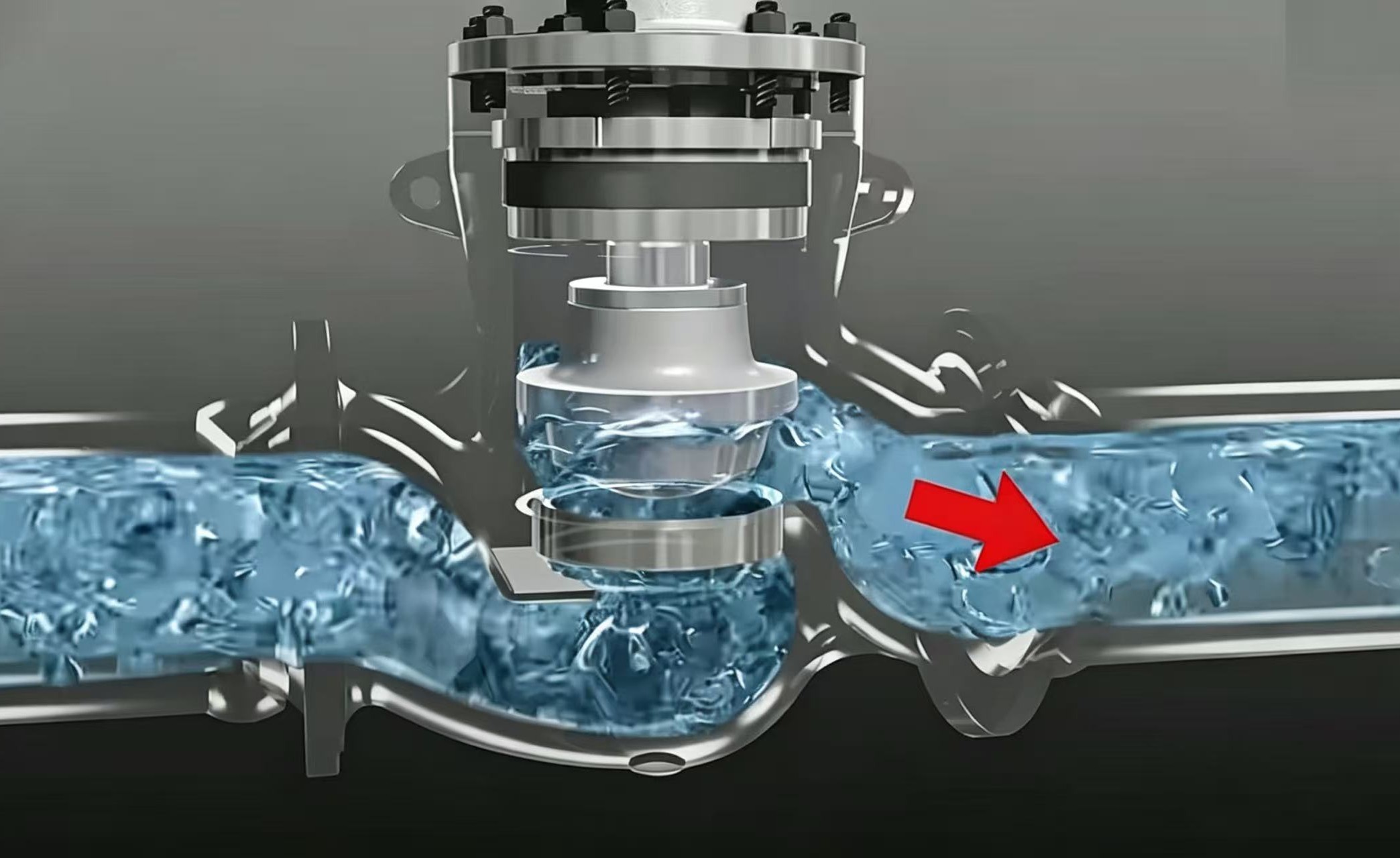
Quick Answer: Why Are Globe Valves Good for Throttling?
The plug moves in a straight line toward or away from the seat, producing a controlled change in flow area. With the correct plug, seat and cage, a globe valve can provide stable modulation, useful rangeability and better pressure-drop handling than many valves intended mainly for isolation.
- Suitable for frequent flow adjustment
- Available with linear or equal-percentage trim
- Compatible with pneumatic, electric or hydraulic actuators
- Available with trims designed to reduce noise, cavitation and erosion
- More controllable at partial opening than standard on/off ball or gate valves
Common Throttling Valve Types at a Glance
| Valve type | Throttling suitability | Main strength | Main limitation |
|---|---|---|---|
| Globe valve | Excellent | Accurate, stable flow control | Higher pressure drop and larger body |
| Cage-guided control valve | Excellent | Pressure-drop control and trim options | Higher cost and more complex trim |
| Needle valve | Excellent for small flow | Fine manual adjustment | Limited sizes and flow capacity |
| V-port ball valve | Good | High capacity and good rangeability | Requires the correct V-port design |
| Eccentric butterfly valve | Good for large flow | Compact body and high capacity | May be less precise than a globe valve |
| Standard butterfly valve | Limited to moderate | Compact and economical | Seat wear or instability at some openings |
| Standard ball valve | Poor | Tight shutoff and low pressure loss | Seat damage and poor partial-open control |
What Is a Throttling Valve?
A throttling valve changes the available flow area to maintain a required flow rate, downstream pressure, tank level or temperature. “Throttling” describes the service condition rather than one specific valve construction.
Typical duties include steam regulation, cooling-water control, boiler feedwater, chemical dosing, pump-discharge pressure control, heat-exchanger temperature control, gas pressure reduction and bypass lines.
The decisive question is whether the valve can control and survive at partial opening. An effective isolation valve may perform poorly when held half open across a substantial pressure drop.
Why Globe Valves Are Commonly Used for Throttling
In a globe valve, the plug moves perpendicular to the seat. Stem travel therefore changes the flow area gradually and predictably. Manufacturers can shape the plug and seat to produce a required inherent flow characteristic.
Equal-percentage trim is often selected when the pressure drop available to the valve changes through the operating range. Linear trim can suit duties where flow should change more directly with valve travel.
Linear motion also integrates naturally with diaphragm, piston and electric linear actuators. A positioner can move the valve in response to a PLC or DCS signal for automatic process control.
How Globe Valve Design Supports Throttling
The body, seat, plug, stem and bonnet create a defined throttling zone. The internal path adds resistance, but it also concentrates the pressure reduction where the trim can be designed to manage it.
- Linear plug travel supports accurate positioning.
- The seat and plug establish a controlled flow area.
- Different trims provide different flow characteristics.
- Cage guidance can improve stability and reduce vibration.
- Balanced trim can reduce the actuator force required at higher pressure drops.
- Multi-stage, anti-cavitation and low-noise trims support more severe duties.
Globe Valves Compared with Other Valve Types
Globe valve vs gate valve
A gate valve is intended primarily for fully open or fully closed isolation. Partial opening can expose the gate and seats to vibration, wire drawing and erosion. Choose a gate valve for low-loss isolation and a globe valve when controlled modulation is required.
Globe valve vs ball valve
A standard ball valve provides excellent quarter-turn shutoff, but partial opening creates a narrow, high-velocity flow path near the ball and seat. This can damage soft seats and make small-angle control abrupt. A purpose-designed V-notch ball valve is a different case: its characterized opening supports rotary throttling and higher capacity.
Globe valve vs butterfly valve
Butterfly valves are compact and economical for large water, air and utility lines. High-performance and offset designs can provide practical control, but a globe control valve generally offers more trim choices and pressure-drop capability when accuracy and severe-service performance matter most.
When a needle valve is better
A tapered needle allows very fine manual adjustment in instrument, sampling and small-flow lines. Its limited passage makes it unsuitable for most large process pipelines.
Key Selection Factors for Throttling Service
Specify the valve from actual operating conditions:
- Minimum, normal and maximum flow rates
- Upstream and downstream pressures
- Required pressure drop across the valve
- Fluid density, viscosity, vapor pressure and solids content
- Operating temperature and corrosion conditions
- Required flow characteristic and rangeability
- Cavitation, flashing, noise and erosion risk
- Shutoff leakage requirement
- Actuator type, control signal and fail position
- Pressure class, materials and end connections
An oversized control valve may spend most of its time near the seat, causing poor control and accelerated wear. An undersized valve may not pass the maximum required flow. For automatic service, size the valve by flow coefficient and process pressure drop—not pipe diameter alone.
Cavitation, Flashing and Noise
Liquid cavitation begins when local pressure drops below vapor pressure and later recovers, collapsing vapor bubbles against trim surfaces. Flashing occurs when downstream pressure remains below vapor pressure, creating persistent two-phase flow. Gas and steam pressure reduction can generate aerodynamic noise and damaging velocity.
Multi-hole cages, staged pressure reduction, anti-cavitation trim, low-noise trim and hardened materials can manage these risks. High-pressure-drop water, steam, condensate, gas or flashing-liquid duties require a proper control valve sizing review.
Manual Throttling vs Automatic Control
A handwheel globe valve or needle valve may suit a utility setting that rarely changes. Automatic control adds a sensor, controller, actuator and usually a positioner. The controller compares the measured value with its set point and moves the valve to regulate the process.
Common arrangements include pneumatic diaphragm or piston actuators, electric linear actuators, 4–20 mA positioners, feedback transmitters and travel switches. Actuator thrust must cover the real differential pressure, stem load and shutoff requirement.
Common Applications
Globe throttling valves are commonly applied to steam flow and pressure control, boiler feedwater, cooling water, condensate, gas pressure reduction, chemical process flow, heat exchangers, bypass control, pump recirculation and reactor feed.
Common Selection Mistakes
- Using a standard ball valve for sustained throttling: partial opening can damage the seat and produce poor control.
- Selecting only by line size: flow coefficient and available pressure drop determine control valve size.
- Ignoring cavitation or flashing: a nominally correct valve can fail quickly under severe pressure reduction.
- Ignoring actuator sizing: insufficient thrust prevents reliable positioning and shutoff.
- Assuming every globe valve is a control valve: trim design, guidance, characteristic and actuator package must match the duty.
Final Thoughts
Globe valves remain a common throttling choice because controlled plug movement, predictable flow behavior and adaptable trim support stable modulation. Needle valves, V-port ball valves and butterfly control valves may be better in specific size, capacity or service conditions. Selection should begin with real flow, pressure, fluid and control data.
Frequently Asked Questions
What is a throttling valve?
It is a valve that regulates flow at partial opening to control flow rate, pressure, temperature or level.
Why are globe valves used for throttling?
Their plug moves linearly toward the seat, creating a predictable change in flow area and supporting characterized trims for stable control.
Can a ball valve be used for throttling?
A standard ball valve is generally unsuitable for sustained throttling. A V-port ball valve can be used when specifically designed and sized for control service.
Can butterfly valves be used for throttling?
Yes. Correctly selected butterfly control valves are practical for large-flow water, air and utility duties, especially where compact size and capacity are priorities.
What is commonly used for steam throttling?
A globe control valve is common because it can manage pressure drop and provide stable modulation. Severe duties may need low-noise or multi-stage trim.
How should a throttling valve be selected?
Use actual flow, pressure drop, medium, temperature, control range, cavitation risk, leakage class and actuator requirements, supported by a valve sizing calculation.
Need Help Selecting a Throttling Valve?
Share the medium, flow range, pressure, temperature, line size, pressure drop and control signal. JIANENG Valve can help evaluate the valve type, trim and actuator package.
Discuss Your Application