
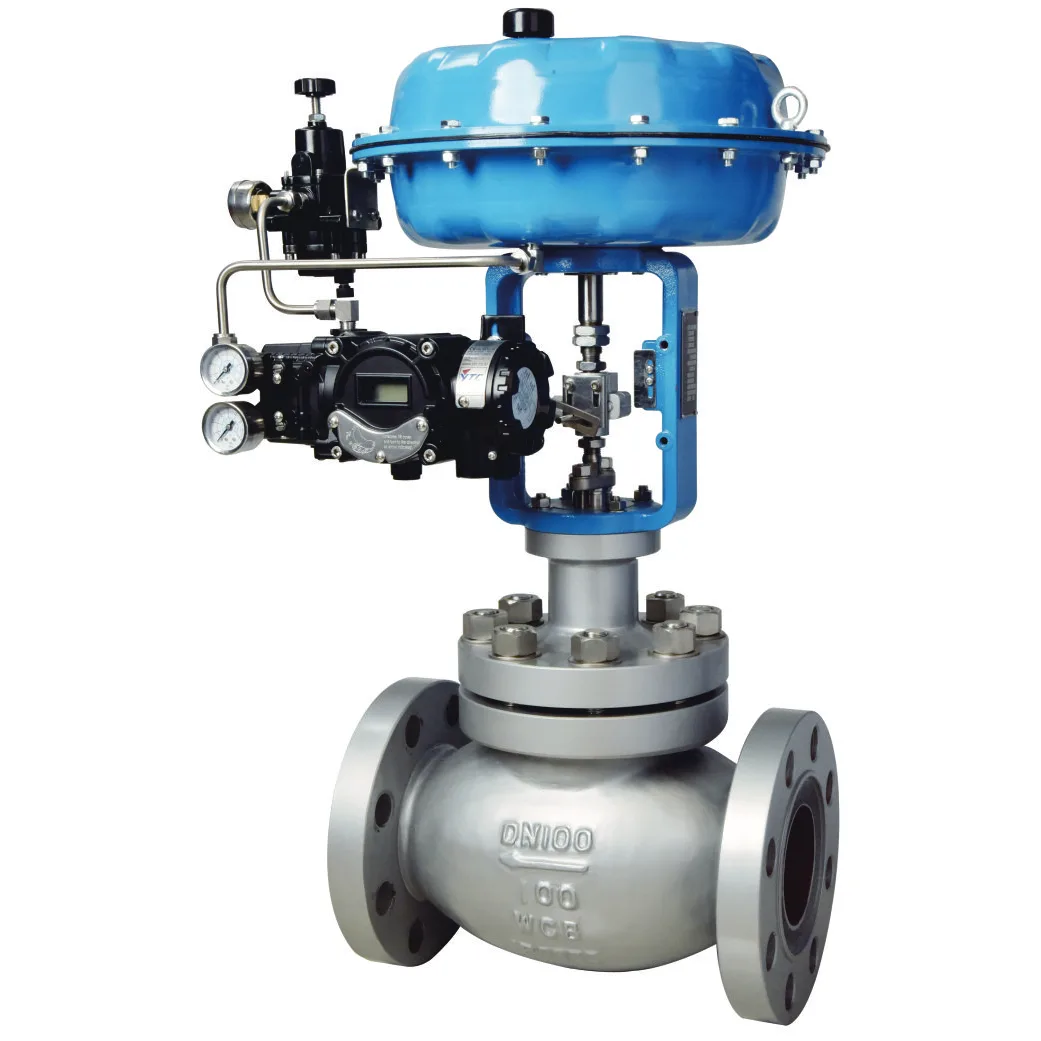
A globe control valve uses a linearly moving plug and seat to vary the flow area in response to an actuator. Its guided stem, shaped trim and adaptable body construction make it a common choice for flow, pressure, temperature and level control in steam, gas and liquid processes.
Reliable selection starts with the required Cv/Kv and the service conditions, then checks valve travel, characteristic, pressure recovery, cavitation, flashing, noise, leakage, materials and actuator thrust. Matching the valve to pipe size alone is not enough.
Key Takeaways
- Globe control valves use linear motion and characterized trim for repeatable modulation.
- Single-seat, cage-guided, balanced, unbalanced and three-way designs solve different load and shutoff problems.
- Required Cv/Kv must be calculated for minimum, normal and maximum operating cases.
- Globe valves have lower pressure recovery than many high-capacity rotary valves, but severe liquid or gas service can still require special trim.
- Actuator sizing must include pressure force, seat load, packing friction and worst-case differential pressure.
How a Globe Control Valve Works
The valve body directs fluid through a seat opening. A plug connected to the stem moves toward or away from that seat, changing the restriction. The actuator supplies linear force, while a positioner compares the command signal with actual stem position and regulates air or power to reduce the error.
“Globe” describes the basic tortuous flow path and linear closure motion, not necessarily a spherical body. Modern globe-style valves include top-guided, post-guided, cage-guided, angle and three-way bodies. The control valve types guide compares these linear designs with butterfly, V-ball and eccentric rotary valves.
The flow-to-travel relationship depends on plug and cage geometry. This allows the same body family to use different trim characteristics, capacities and severe-service options. The selected trim—not body size alone—defines rated Cv/Kv and much of the control behavior.
Main Globe Control Valve Designs
Single-seat unbalanced valve
A single plug closes against one seat. The design can provide a direct leakage path and relatively simple trim, but pressure acting on the plug creates an unbalanced force that the actuator must overcome. Flow direction, plug area and shutoff differential pressure therefore affect actuator size.
Balanced plug or cage-guided valve
A balanced trim reduces pressure force by exposing opposing areas or using balance passages. This can permit a smaller actuator at high differential pressure. Balance seals or piston rings add leakage, friction and temperature considerations, so “balanced” does not mean force free or zero leakage.
Cage guidance supports the plug over a substantial travel length and allows windows in the cage to shape the characteristic. Multi-hole, multi-stage and noise-control cages are extensions of this architecture.
Angle globe valve
An angle body changes flow direction by approximately 90 degrees within the valve. It can replace a separate elbow and may provide a useful outlet path for flashing, erosive or high-velocity service. The body orientation, drainage, pipe reactions and maintenance access must be considered.
Three-way globe valve
A three-way globe valve mixes two streams into one outlet or diverts one inlet between two outlets, depending on trim and flow direction. Port arrangement, actuator action, leakage between ports and temperature interaction must be defined. A three-way valve is not two independent shutoff valves in one body.
| Body style | Typical use | Trim notes | Points to verify |
|---|---|---|---|
| Single-seat unbalanced | Clean liquid or gas, modest differential pressure | Simple trim, predictable characteristic | Unbalanced force and actuator sizing |
| Cage-guided balanced | Modulating service across a wider range | Multi-hole or staged cages available | Balance-seal leakage and temperature limits |
| Angle body | Flashing, erosive or high-velocity service | Outlet path aligned with downstream pipe | Drainage, pipe reactions and maintenance access |
| Three-way | Mixing or diverting | Two inlets, one outlet (or vice versa) | Port arrangement, actuator action and leakage |
Flow Characteristic and Installed Behavior
Linear characteristic
With a linear inherent characteristic, equal travel increments create approximately equal increments of Cv under constant pressure drop. It can suit systems where valve pressure drop stays relatively stable or where the process gain supports this relationship.
Equal-percentage characteristic
With an equal-percentage characteristic, equal travel increments create approximately equal percentage changes in Cv. It is often useful when valve pressure drop decreases as system flow increases, because the installed response can become more nearly linear.
Quick-opening characteristic
Quick-opening trim provides a large capacity increase early in travel and is normally associated with on-off or relief-type duties rather than precise continuous control. Always distinguish inherent characteristic from installed behavior.
The system curve determines how much pressure drop remains across the valve at each load. A published trim curve measured at constant differential pressure cannot by itself predict the installed flow response.
How to Size and Select the Valve
- Define the fluid. Provide composition, phase, density, viscosity, vapor pressure and critical pressure for liquids where required. For gases, include molecular weight or specific gravity, compressibility and heat-capacity ratio. For steam, state saturated or superheated condition and provide mass flow, pressure and temperature.
- Build operating cases. Use minimum, normal and maximum flow with inlet pressure, outlet pressure and temperature at each case. Include startup or upset only when it is a genuine design requirement. Label pressure and units clearly.
- Calculate required Cv/Kv. Use IEC 60534-2-1 or a harmonized ISA method for the fluid. Apply piping-geometry, viscosity, liquid-pressure-recovery and expansion corrections as required. Avoid adding undocumented safety factors to both flow and Cv.
- Select body size and trim. Choose a trim whose rated Cv/Kv covers maximum flow while keeping normal and minimum flow in a useful travel range. Check velocity, outlet size, rangeability, characteristic and leakage. The control valve sizing guide gives a complete calculation workflow.
- Select materials. Match body, trim, seat, cage, stem, packing and gasket materials to corrosion, erosion, temperature, pressure and leakage requirements. Hard facing can resist wear but may affect galling, repair and compatibility. Soft seats can improve shutoff but impose temperature and chemical limits.
- Check the actuator. Calculate pressure force, seat load, packing friction and additional forces in the opening and closing directions. Use maximum shutoff differential pressure and minimum actuator supply. Confirm stroke, speed, fail action and stem connection.
Cavitation, Flashing and Noise
Cavitation occurs when local liquid pressure falls below vapor pressure and then recovers, causing vapor bubbles to collapse. Globe valves generally have lower pressure recovery than many rotary valves, but a severe pressure drop can still cause damage. Staged pressure reduction, anti-cavitation cages, changed pressure allocation or another valve arrangement may be needed.
Flashing occurs when downstream pressure remains below vapor pressure, so vapor continues downstream. No trim can collapse that vapor back into liquid. Selection focuses on directing the two-phase stream, controlling velocity, choosing erosion-resistant materials and designing downstream piping.
Gas and steam pressure reduction can create aerodynamic noise and vibration. Multi-hole or staged trim, a diffuser, larger outlet, heavier pipe or acoustic insulation can reduce risk when supported by a calculation. The Emerson Control Valve Handbook provides broader treatment of valve styles, sizing, actuators and noise.
Actuator, Positioner and Accessories
Pneumatic diaphragm actuators are common for globe valves because they provide direct linear motion and a spring fail direction. Piston, electric and electrohydraulic actuators can fit higher-force, special-utility or remote applications. The globe valve throttling guide provides additional context on manual and automated operation.
A positioner is normally used for modulating control. Specify input signal, action, feedback, air supply, filter regulator, hazardous-area rating and communication. Solenoids, limit switches, volume boosters and lock-up valves should be added only when their function and failure state are defined.
Packing affects both emissions and control. High packing load can increase stem friction and deadband. Select the packing system for temperature, fluid, emissions requirement and actuator capability, then include it in thrust sizing.
Globe Control Valve Datasheet Checklist
- Fluid composition and phase
- Minimum, normal and maximum flow
- Inlet and outlet pressure for every case
- Temperature and relevant properties
- Pipe size, schedule and connection
- Required Cv/Kv and selected rated Cv/Kv
- Body style, trim and characteristic
- Predicted travel for every case
- Body, trim, seat, packing and gasket materials
- Leakage and test requirement
- Cavitation, flashing, noise and velocity review
- Actuator supply, fail action, signal and accessories
- Applicable standards, documentation and inspection
Common Selection Mistakes
- Matching valve size to pipe size
- Calculating only maximum flow
- Guessing downstream pressure
- Applying a liquid equation to gas or steam
- Selecting rated Cv far above normal requirement
- Ignoring cavitation, flashing or aerodynamic noise
- Treating inherent characteristic as installed response
- Omitting packing friction and seat load from actuator sizing
- Comparing quotations with different trim, leakage or material assumptions
Frequently Asked Questions
Why is a globe valve good for control?
Its linear motion, guided plug and shaped trim allow repeatable changes in flow area. Manufacturers can provide linear, equal-percentage, low-noise and anti-cavitation trims within a globe-style body, making it adaptable to many process-control duties.
What is the difference between a globe valve and a globe control valve?
A manual globe valve can throttle, but a globe control valve is configured as a final control element with characterized trim, an actuator and usually a positioner. Its capacity, travel, leakage and response are selected for a control loop.
Can a globe control valve be smaller than the pipe?
Yes. The selected body and trim follow required Cv/Kv, travel, velocity, noise and mechanical checks. Reducers must be included in the sizing, and outlet expansion may be necessary for gas, steam or flashing service.
Which flow direction should be used?
Flow-to-open and flow-to-close create different plug forces, stability and fail behavior. The correct direction depends on trim, service and manufacturer design. Follow the valve data and mark the required piping direction clearly.
Match gear and CV, not pipe size. A globe control valve is sized from required Cv/Kv across minimum, normal and maximum cases, then confirmed for travel, characteristic, severe-service behavior and actuator thrust. Treating the valve as a pipe-size fitting is the most common source of unstable control and premature trim wear.
Conclusion
A globe control valve is valuable because its body, trim and actuator can be configured for precise process control. Reliable selection joins fluid data, operating cases, Cv/Kv, travel, characteristic, severe-service checks, materials, leakage and actuator thrust in one documented decision.
For a technical review, share minimum, normal and maximum flow, inlet and outlet pressure, temperature, fluid properties, pipe details, control objective and fail requirement. Jianeng Valve can help size the valve, compare trim options and organize the actuator and accessory configuration before quotation.
Technical Sources
- Emerson, Control Valve Handbook
- International Electrotechnical Commission, IEC 60534-2-1:2011 — Industrial-process control valves
- Spirax Sarco, Control Valves — Learn About Steam
Sources verified August 28, 2026.
Need Help Specifying a Globe Control Valve?
Share the fluid, minimum/normal/maximum flow, inlet and outlet pressure, temperature, pipe details, control objective, characteristic preference and fail requirement. JIANENG Valve can help size the trim, compare body styles and organize the actuator and accessory configuration before quotation.
Discuss Your Application