A motorized valve combines a valve body with an electric actuator for automatic opening, closing or positioning. The right choice between a motorized ball valve and a motorized butterfly valve depends on size, pressure, flow, shutoff, control mode, installation space and budget.
Both quarter-turn valve types can provide remote operation and position feedback in water treatment, HVAC, chemical process systems, utility pipelines, skid equipment and general industrial automation.
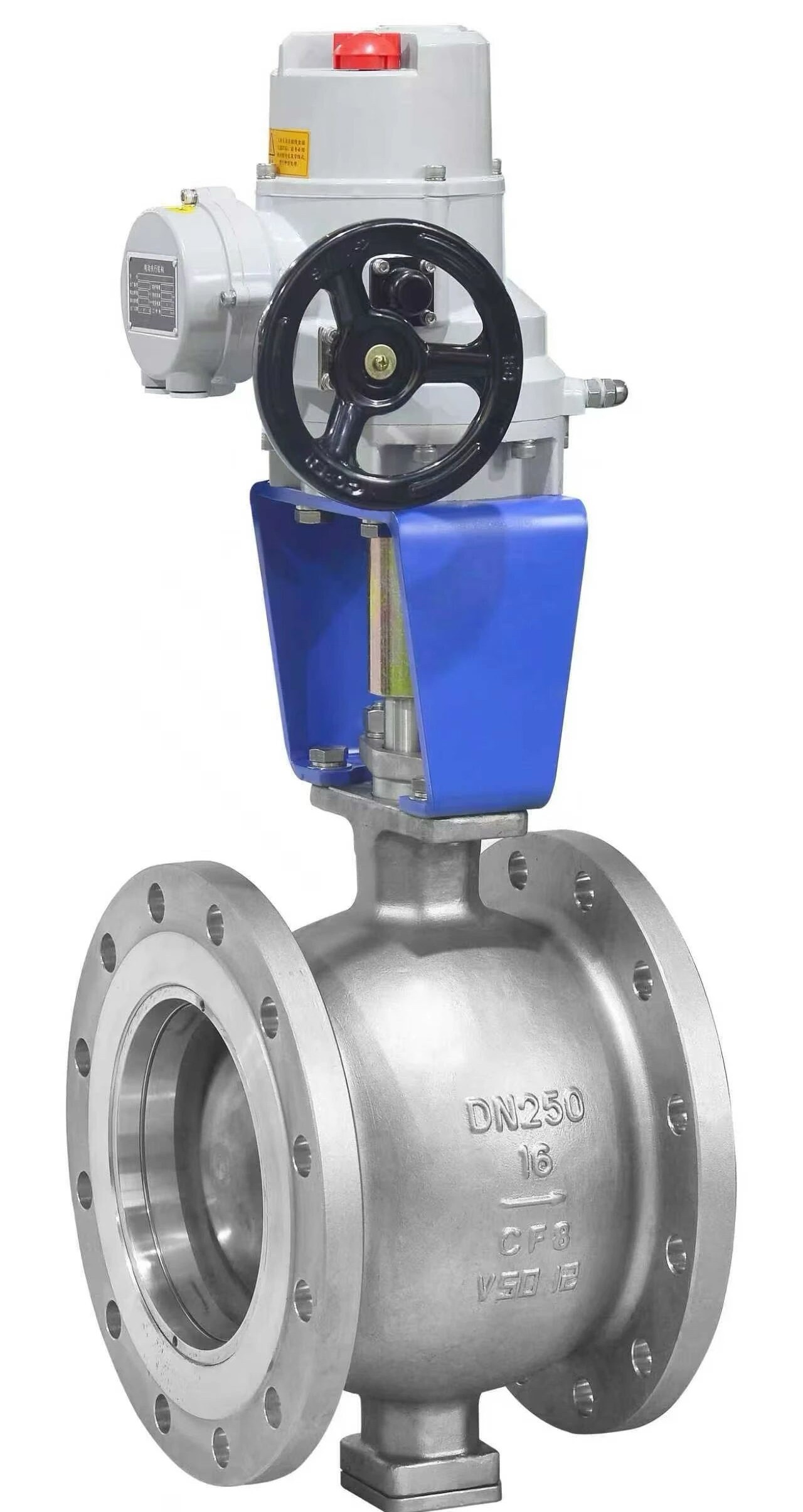
The best selection depends on valve size, pressure, flow capacity, shutoff requirement, medium, installation space, actuator torque, control signal and total cost. This guide compares the two valve types from a practical engineering and procurement perspective.
Quick Answer: Which Motorized Valve Should You Choose?
Choose a motorized ball valve
Use it when tight shutoff, low open pressure drop, smaller pipe size, clean media or reliable isolation is the priority.
Choose a motorized butterfly valve
Use it when the pipe is larger, space and weight matter, or the project needs economical automation for water, air, cooling or HVAC service.
- Motorized ball valve: usually better for tight shutoff and smaller sizes.
- Motorized butterfly valve: usually better for larger sizes, lower weight and lower cost.
- Both can be on/off or modulating when the valve and actuator are selected for that duty.
- Actuator torque and the real operating conditions must be checked before ordering.
Motorized Ball Valve vs Motorized Butterfly Valve at a Glance
| Comparison factor | Motorized ball valve | Motorized butterfly valve |
|---|---|---|
| Valve motion | Quarter-turn ball rotation | Quarter-turn disc rotation |
| Flow path | Bore through the ball | Disc remains in the flow path |
| Open pressure drop | Very low for full-port designs | Higher because the disc remains in flow |
| Shutoff performance | Usually very good | Good; depends on seat and design |
| Common size range | Small to medium; larger sizes are possible | Medium to very large sizes |
| Weight | Heavier as size increases | Lighter and more compact |
| Large-size cost | Usually higher | Usually lower |
| Throttling ability | Poor for standard ball; better with V-port designs | Moderate to good depending on design |
| Best fit | Automatic isolation | Large-flow automation and economical control |
What Is a Motorized Valve?
A motorized valve is a valve assembly that combines a valve body with an electric actuator. The actuator uses a motor, gearbox and internal controls to move the valve. For quarter-turn valves, it normally rotates 90 degrees to open or close the valve.
Motorized valves are used when a valve must be operated remotely or automatically. The actuator may receive an open/close signal, a reversing power signal, a relay command, a PLC output or a modulating signal such as 4–20 mA or 0–10 V.
A typical assembly may include:
- Valve body and trim
- Electric actuator, motor and gearbox
- Limit switches and torque protection
- Manual override and position indicator
- Position feedback, local controls or communication modules
The valve body controls the medium and the actuator controls movement. A reliable selection must consider both parts together.
What Is a Motorized Ball Valve?
A motorized ball valve is a ball valve operated by an electric actuator. The ball has a hole through the center. When the bore aligns with the pipeline, the valve is open; when the ball rotates 90 degrees, the solid side blocks the flow.
Motorized ball valves are popular because they provide tight shutoff, quick quarter-turn operation and low pressure drop when fully open. Full-port ball valves are especially useful when flow restriction must be minimized.
Common applications include water treatment skids, chemical dosing systems, industrial utility lines, air and gas isolation, oil and fuel systems, smaller HVAC zones, tank filling and remote shutoff systems.
Available body styles include two-piece, three-piece, flanged, threaded, welded, floating ball and trunnion-mounted designs. The actuator must be sized according to valve torque at the maximum differential pressure.
What Is a Motorized Butterfly Valve?
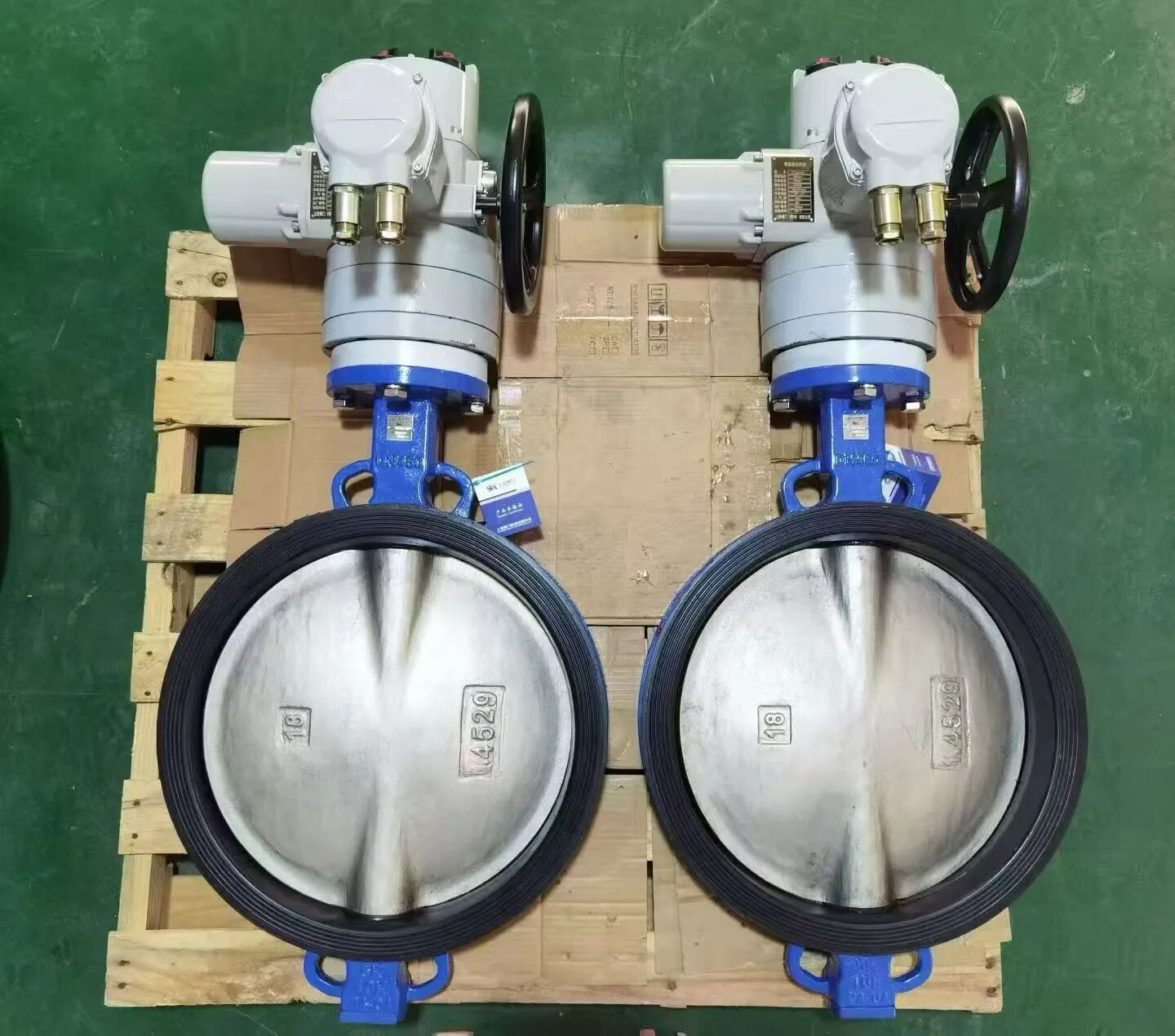
A motorized butterfly valve is a butterfly valve operated by an electric actuator. It uses a disc mounted on a shaft. When the disc turns parallel to the flow, the valve is open; when it turns perpendicular to the flow, the valve is closed.
Motorized butterfly valves are compact, lightweight and economical in larger sizes. Their short face-to-face dimension makes them useful in plant rooms, pump stations, water lines and equipment skids.
Common applications include HVAC chilled and condenser water, water treatment and wastewater, cooling water, fire and utility water, air handling, large pipe isolation and pump discharge control.
Wafer, lugged, flanged, double-offset and triple-offset designs are available depending on pressure, temperature, seat material and shutoff requirement.
Flow Capacity and Pressure Drop
A full-port motorized ball valve gives a straight flow path through the ball. When fully open, the bore can be close to the pipe internal diameter, creating low pressure drop for systems that need high flow with minimal restriction.
A motorized butterfly valve always has a disc and shaft in the flow path. Even when fully open, this creates some obstruction and can increase pressure drop compared with a full-port ball valve. In large water, cooling and utility lines, the difference may still be acceptable.
Where pump energy, flow capacity or pigging matters, a full-port ball valve may be preferable. Where large pipe size, compact installation and cost are more important, a butterfly valve is often more practical.
Size, Weight and Installation Space
As pipe size increases, the body and actuator difference becomes important. A large ball valve requires a large ball, strong body and higher operating torque, which increases cost, weight and installation space.
A butterfly valve uses a thin disc inside a compact body. In sizes such as DN200, DN300, DN500 and above, it is usually lighter and easier to install than a ball valve, with less piping space required.
Shutoff Performance
Motorized ball valves usually provide very good shutoff. Soft-seated designs can achieve tight sealing in many clean liquid and gas services. Metal-seated designs can handle higher temperature or more severe service, but the leakage class depends on the construction.
Motorized butterfly valves can also provide good shutoff, especially resilient-seated and high-performance designs. Performance depends on seat material, disc design, pressure direction, temperature and valve rating.
For critical isolation, confirm the leakage class, pressure rating and seat material instead of assuming performance from valve type alone.
On/Off Service vs Modulating Control
Many motorized valves are used for on/off service in isolation, filling, draining, switching and zone control. Others position the valve at intermediate points according to a 4–20 mA, 0–10 V or digital control signal.
- A standard ball valve is not ideal for sustained throttling.
- A V-port ball valve can provide better rotary control.
- A butterfly valve can provide moderate flow control in suitable applications.
- A globe control valve may be better for precise throttling and high pressure drop.
Do not use a simple on/off actuator for modulating control. The actuator must be designed for frequent positioning and the valve must be suitable for throttling.
Actuator Torque and Sizing
Required actuator torque depends on valve size, pressure, seat material, differential pressure, medium, temperature and operating frequency. For a ball valve, break torque may be much higher than running torque after the valve has been closed under pressure.
For a butterfly valve, torque depends on disc position, pressure drop, seat compression, flow velocity and bearing friction. Resilient-seated designs can have high seating and unseating torque.
Before ordering, confirm:
- Valve torque at the maximum differential pressure
- Actuator safety factor and duty cycle
- Power supply, control signal and feedback
- Fail position, manual override and enclosure rating
- Hazardous-area or outdoor installation requirements
An undersized actuator may fail to open or close the valve. An oversized actuator without torque protection may damage the stem, seat or mechanical stops.
Control Wiring and Feedback
Basic on/off actuators may need only a power supply and open/close control wiring. More advanced units can include limit switches, auxiliary switches, torque switches, local controls, position feedback, heaters, fault output and communication modules.
Common control options include 24 V DC, 24 V AC, 110 V AC, 220 V AC, 380 V AC, open/close relay control, 4–20 mA, 0–10 V, dry contact feedback and analog position feedback.
Media and Material Selection
The valve material must match the medium. Common body materials include cast iron or ductile iron for water and HVAC, carbon steel for many process lines, stainless steel for corrosive or sanitary service, and special coatings or linings for aggressive media.
Seat and seal materials may include PTFE, RPTFE, EPDM, NBR, FKM or metal. For dirty water, slurry, solids or corrosive chemicals, check particle tolerance, lining and seal compatibility before selecting the actuator package.
Which Motorized Valve Is Better for Different Applications?
| Application condition | Better choice | Reason |
|---|---|---|
| Small water or chemical line | Motorized ball valve | Tight shutoff and compact automation |
| Large HVAC chilled water line | Motorized butterfly valve | Lower cost and lighter weight |
| Full-bore flow required | Motorized ball valve | Lower pressure drop in full-port designs |
| Large pump discharge isolation | Motorized butterfly valve | Compact size and easier installation |
| Gas shutoff in a small pipe | Motorized ball valve | Reliable sealing and quarter-turn operation |
| High-accuracy modulating control | Globe control valve or V-port ball valve | Better control characteristic |
| Large utility water line | Motorized butterfly valve | Economical for larger diameter |
| Corrosive chemical service | Depends on material | Check body, seat and seal compatibility |
Common Selection Mistakes
- Choosing the actuator only by valve size: pressure, seat material and service conditions also determine torque.
- Using a standard ball valve for throttling: partial opening can damage seats and produce poor control.
- Ignoring duty cycle: an occasional-use actuator may overheat during frequent modulation.
- Ignoring the environment: outdoor, wet, dusty, corrosive or hazardous sites need the correct enclosure, coating and certification.
Final Thoughts
A motorized ball valve and a motorized butterfly valve can both automate industrial flow, but they solve different problems. The ball valve is usually better for tight shutoff, small to medium sizes and low pressure drop. The butterfly valve is usually better for larger pipes, lower weight, compact installation and economical automation.
The actuator is just as important as the valve body. Confirm torque, voltage, control mode, feedback, duty cycle, enclosure rating and fail-safe requirement before selecting the final assembly.
Frequently Asked Questions
What is a motorized valve?
A motorized valve is a valve operated by an electric actuator. The actuator uses a motor and gearbox to open, close or position the valve according to a power supply and control signal.
What is the difference between a motorized ball valve and a motorized butterfly valve?
A motorized ball valve uses a rotating ball with a bore through it. A motorized butterfly valve uses a rotating disc. Ball valves usually provide tighter shutoff and lower pressure drop, while butterfly valves are lighter and more economical in larger sizes.
Which is better, a motorized ball valve or a motorized butterfly valve?
Neither is always better. A motorized ball valve is better for tight shutoff and small to medium lines. A motorized butterfly valve is better for large water, air, HVAC and utility lines where compact size and cost matter.
Can a motorized valve be used for flow control?
Yes, but the actuator and valve must be designed for modulating service. A standard on/off motorized ball valve is not ideal for throttling.
Does a motorized valve need compressed air?
No. A motorized valve uses electric power, not compressed air. This is useful where instrument air is unavailable or electrical control is simpler.
How do I size an electric actuator?
Use the valve torque requirement at maximum differential pressure, then apply the manufacturer’s recommended safety factor. Consider break torque, running torque, seat material, medium, temperature and operating frequency.
Need Help Selecting a Motorized Valve?
Share the pipe size, pressure, medium, temperature, voltage, control signal, actuator speed and required feedback. JIANENG Valve can help evaluate the valve and actuator package.
Discuss Your Application